30.3.2026
30.3.2026
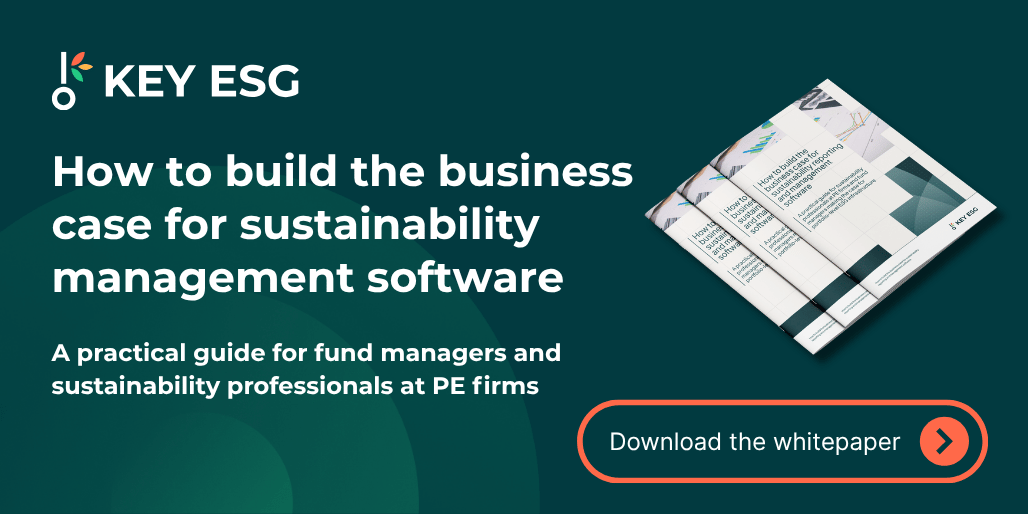
The fund manager's guide to building a business case for ESG reporting infrastructure
Event Date:


For sustainability leads and fund managers at private equity firms
Portfolio-level ESG reporting is no longer optional. The question is whether your infrastructure is fit for purpose.
SFDR, CSRD, EDCI, Invest Europe. The obligations on PE firms have compounded faster than most reporting operations have evolved. For many funds, the response has been to add more spreadsheets, more manual coordination with portfolio companies, and more resource at each reporting cycle.
The data arrives late, in inconsistent formats, with limited auditability. The team produces numbers, but not with the confidence that comes from a system built for the purpose.
You know the infrastructure needs to change. This guide helps you make that case internally, to investment committees, operating partners, and portfolio company leadership, and get the decision made.
The cost of the current approach
What manual, fragmented portfolio-level reporting actually costs in fund team resource, portfolio company burden, and the audit exposure that grows with every reporting cycle.
The regulatory landscape for PE, mapped
SFDR, CSRD, EDCI, Invest Europe and beyond. What's mandatory, what investors are already expecting, and why building compliance framework by framework creates compounding risk.
What good infrastructure looks like at fund level
The operational characteristics of a reporting environment that delivers consistent, comparable data across a diverse portfolio, without placing unsustainable demands on portfolio companies.
How to build the business case
A practical framework for translating ESG reporting infrastructure into language that resonates with investment committees and operating partners, including how to quantify ROI and handle the objections you'll face.
How to navigate the buying process internally
Stakeholder mapping across fund and portfolio level, objection handling, and how to move a procurement decision forward without losing momentum.
What implementation actually looks like
A realistic view of what the transition involves; configuration timelines, portfolio company onboarding, and where efficiency gains become visible first.
For sustainability leads and fund managers at private equity firms
Portfolio-level ESG reporting is no longer optional. The question is whether your infrastructure is fit for purpose.
SFDR, CSRD, EDCI, Invest Europe. The obligations on PE firms have compounded faster than most reporting operations have evolved. For many funds, the response has been to add more spreadsheets, more manual coordination with portfolio companies, and more resource at each reporting cycle.
The data arrives late, in inconsistent formats, with limited auditability. The team produces numbers, but not with the confidence that comes from a system built for the purpose.
You know the infrastructure needs to change. This guide helps you make that case internally, to investment committees, operating partners, and portfolio company leadership, and get the decision made.
The cost of the current approach
What manual, fragmented portfolio-level reporting actually costs in fund team resource, portfolio company burden, and the audit exposure that grows with every reporting cycle.
The regulatory landscape for PE, mapped
SFDR, CSRD, EDCI, Invest Europe and beyond. What's mandatory, what investors are already expecting, and why building compliance framework by framework creates compounding risk.
What good infrastructure looks like at fund level
The operational characteristics of a reporting environment that delivers consistent, comparable data across a diverse portfolio, without placing unsustainable demands on portfolio companies.
How to build the business case
A practical framework for translating ESG reporting infrastructure into language that resonates with investment committees and operating partners, including how to quantify ROI and handle the objections you'll face.
How to navigate the buying process internally
Stakeholder mapping across fund and portfolio level, objection handling, and how to move a procurement decision forward without losing momentum.
What implementation actually looks like
A realistic view of what the transition involves; configuration timelines, portfolio company onboarding, and where efficiency gains become visible first.
%402x.png)
.png)
