18.5.2026
18.5.2026
Whitepaper: Common mistakes in sustainability reporting (and how to avoid them)
Event Date:


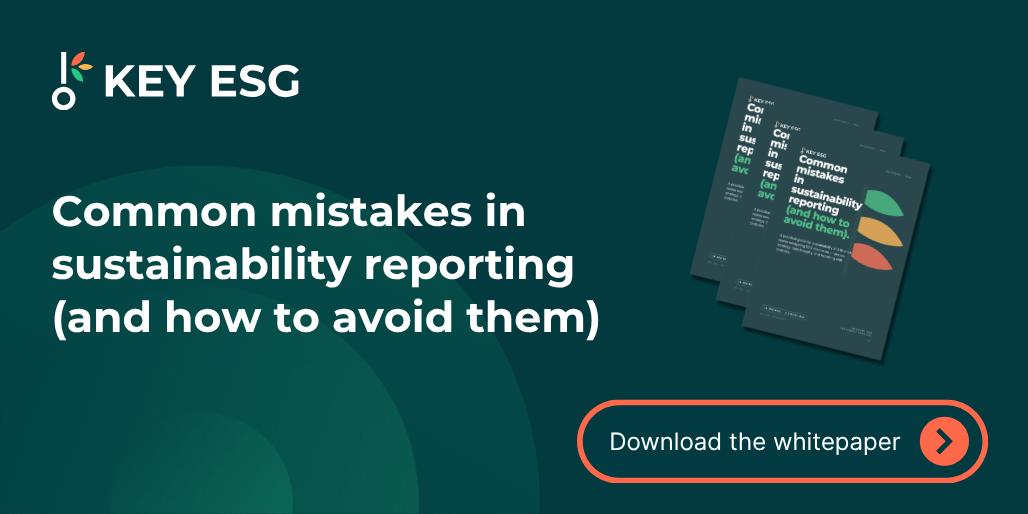
Sustainability disclosure is no longer voluntary for most organisations. Regulators are enforcing, investors are scrutinising, and auditors are asking harder questions. The problem isn't that teams don't know the standards, it's that the processes behind the data aren't built to hold up.
This whitepaper is a practical guide for sustainability and finance teams who want to get reporting right: not just compliant, but credible, consistent, and audit-ready.
Strategy and materiality
Why ESG reporting fails without executive sponsorship, named ownership, and a continuous cadence and how to build those foundations before the data collection starts.
Data integrity
The hidden cost of spreadsheets, inconsistent definitions, and unverified estimates and the reporting methods that produce numbers you can stand behind.
Reporting with purpose
How to choose the right frameworks for your organisation and protect the year-on-year comparability that makes your data credible over time.
AI-powered validation
Three validation rules that scale quality control as reporting complexity grows and what it means to close a cycle with documented evidence rather than hope.
Download the whitepaper to get the full ten-mistake breakdown, a carbon data methodology guide, and a pre-cycle checklist you can use straight away.
Sustainability disclosure is no longer voluntary for most organisations. Regulators are enforcing, investors are scrutinising, and auditors are asking harder questions. The problem isn't that teams don't know the standards, it's that the processes behind the data aren't built to hold up.
This whitepaper is a practical guide for sustainability and finance teams who want to get reporting right: not just compliant, but credible, consistent, and audit-ready.
Strategy and materiality
Why ESG reporting fails without executive sponsorship, named ownership, and a continuous cadence and how to build those foundations before the data collection starts.
Data integrity
The hidden cost of spreadsheets, inconsistent definitions, and unverified estimates and the reporting methods that produce numbers you can stand behind.
Reporting with purpose
How to choose the right frameworks for your organisation and protect the year-on-year comparability that makes your data credible over time.
AI-powered validation
Three validation rules that scale quality control as reporting complexity grows and what it means to close a cycle with documented evidence rather than hope.
Download the whitepaper to get the full ten-mistake breakdown, a carbon data methodology guide, and a pre-cycle checklist you can use straight away.
%402x.png)
.png)
