Medium and large corporate enterprises face increasing regulatory and assurance requirements across sustainability and climate reporting. Organisations with 1,000+ employees and multi-entity operating structures must coordinate data across finance, procurement, operations, HR and compliance functions, while preparing for external scrutiny under frameworks such as CSRD and IFRS S1 and S2.
Workiva is a recognised platform in financial and regulatory reporting. For some enterprises, extending it into sustainability reporting aligns well with existing governance structures. For others, sustainability reporting has evolved into a discipline that requires a dedicated management system built around carbon accounting, structured workflows and multi-framework data control.
This guide reviews Workiva, explains why some medium and large enterprises assess alternatives, and outlines seven sustainability management platforms to consider.
The TL;DR - Summary of alternatives
Workiva overview
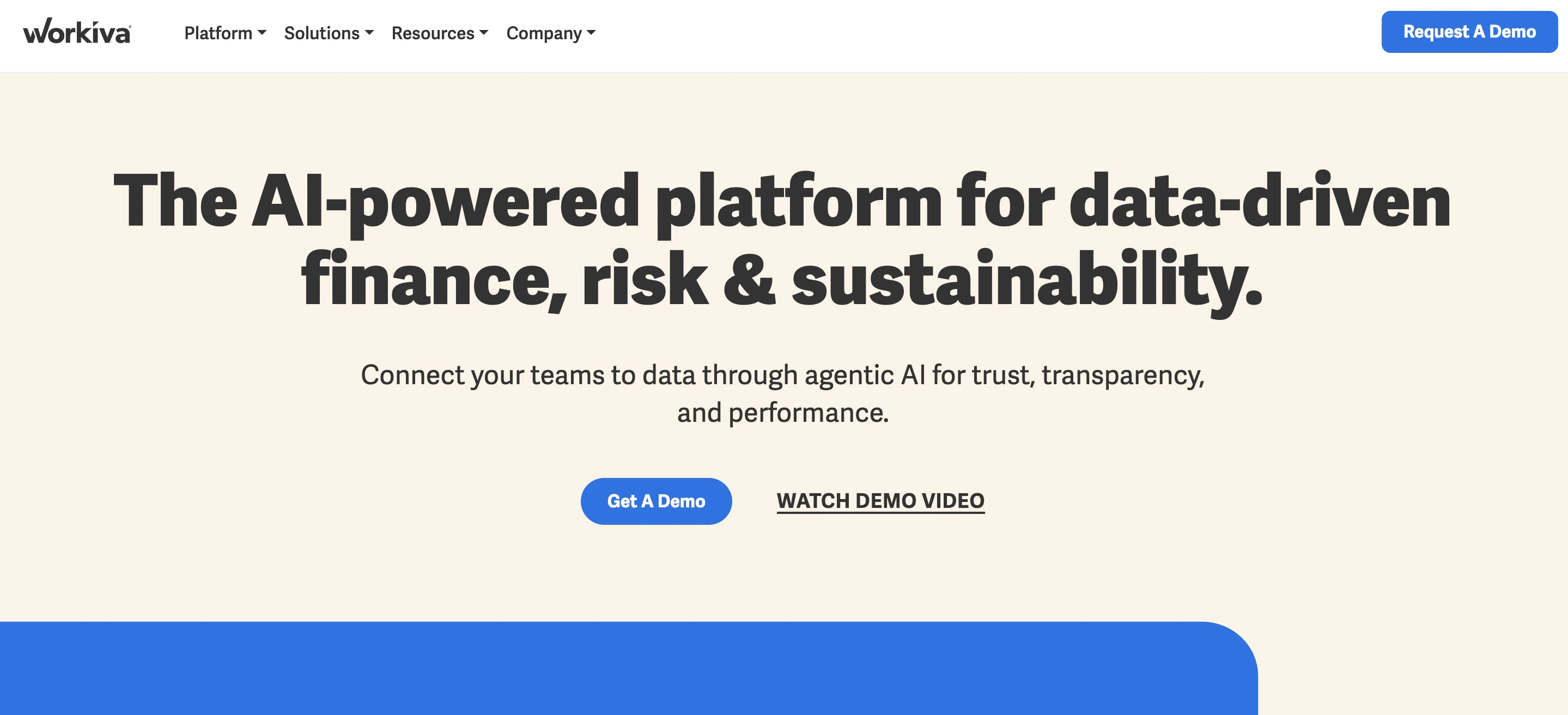
Workiva describes itself as a platform for data-driven finance, risk and sustainability. It is widely used by large enterprises for financial reporting, regulatory filings, and internal controls.
In sustainability reporting, Workiva supports:
- ESG and sustainability disclosures
- Integration with financial reporting processes
- Data aggregation and structured reporting outputs
- Collaboration across teams
Workiva is particularly attractive to organisations that already rely on it for financial reporting. In those cases, sustainability reporting can sit within an existing governance and disclosure environment.
For enterprises seeking tight alignment between finance, risk and sustainability, this integrated model can be compelling.
When enterprise sustainability teams review their reporting systems
As sustainability reporting requirements expand, medium and large enterprises periodically reassess whether their existing systems support long-term regulatory, operational and assurance needs.
As reporting moves toward finance-grade scrutiny, sustainability leaders assess whether their current platform supports structured data governance at enterprise scale.
Common evaluation criteria include the following.
Sustainability reporting moving beyond disclosure
In many organisations, sustainability reporting began as a narrative exercise. It now involves:
- Detailed Scope 1, 2 and 3 carbon accounting
- Activity data collection across multiple sites and subsidiaries
- Supporting evidence for each reported datapoint
- Documented approvals and change logs
Where reporting processes rely heavily on spreadsheets or external advisory support, scaling to meet regulatory requirements becomes operationally complex.
Medium and large enterprises frequently look for systems designed around structured sustainability workflows rather than disclosure output alone.
Increasing Scope 3 exposure
For organisations with global supply chains, complex procurement structures or distributed operations, Scope 3 emissions represent the largest share of total emissions. Managing all 15 Scope 3 categories under the GHG Protocol requires:
- Consistent activity data capture
- Emission factor management
- Assumption tracking
- Clear audit documentation
As carbon accounting moves closer to financial-grade scrutiny, calculation transparency and traceability become central requirements.
Cross-functional data ownership
In enterprises with a turnover above €100m, sustainability data does not sit in a single department. Finance, operations, procurement and compliance teams all contribute inputs.
Sustainability leaders require structured workflows that:
- Assign responsibility
- Track submission status
- Store evidence centrally
- Maintain version history
This level of governance demands a system built for enterprise coordination.
Multi-framework obligations from a single dataset
Enterprises may report against:
Managing these frameworks independently increases the risk of duplication and reconciliation. Many organisations now seek platforms that maintain a single, structured data model and map datasets across multiple standards.
7 alternatives to Workiva
Below are seven platforms enterprise sustainability teams frequently consider when reviewing alternatives to Workiva.
1. KEY ESG
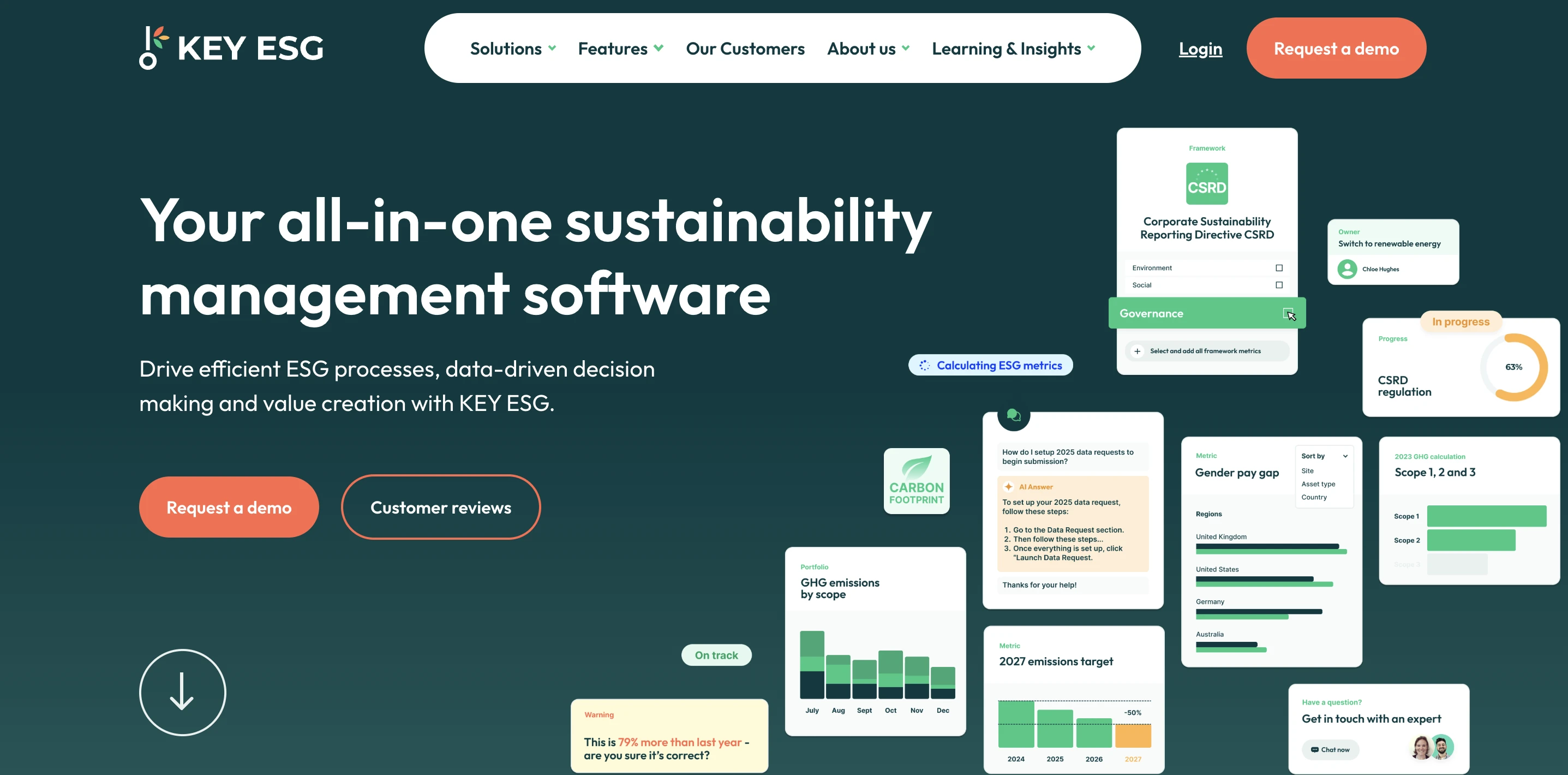
KEY ESG is a sustainability management software platform designed for medium to large enterprises and investment firms. It focuses on audit-ready, multi-framework sustainability and carbon accounting workflows, owned and managed in-house by business teams.
Services offered:
- Centralised sustainability data collection across entities and sites
- Full Scope 1, 2 and 3 carbon accounting
- Access to 70,000+ emission factors from recognised sources, including DEFRA and the US EPA
- Mapping to frameworks such as CSRD, IFRS S1/S2, SFDR, TCFD, CDP, GRI, Invest Europe, EDCI, and California Climate Laws
- Built for compliance with approvals, evidence management and audit trails
Key strengths:
- Designed specifically for sustainability workflows rather than general reporting
- Unified data model supporting multiple frameworks from a single dataset
- Strong Scope 3 coverage for complex value chains
- Supports unlimited entities and organisational structures
- Built for finance, operations, compliance and investor relations teams
Best for: Enterprise sustainability teams that want a dedicated sustainability system combining carbon accounting, regulatory reporting and operational performance tracking within a single platform.
2. Persefoni
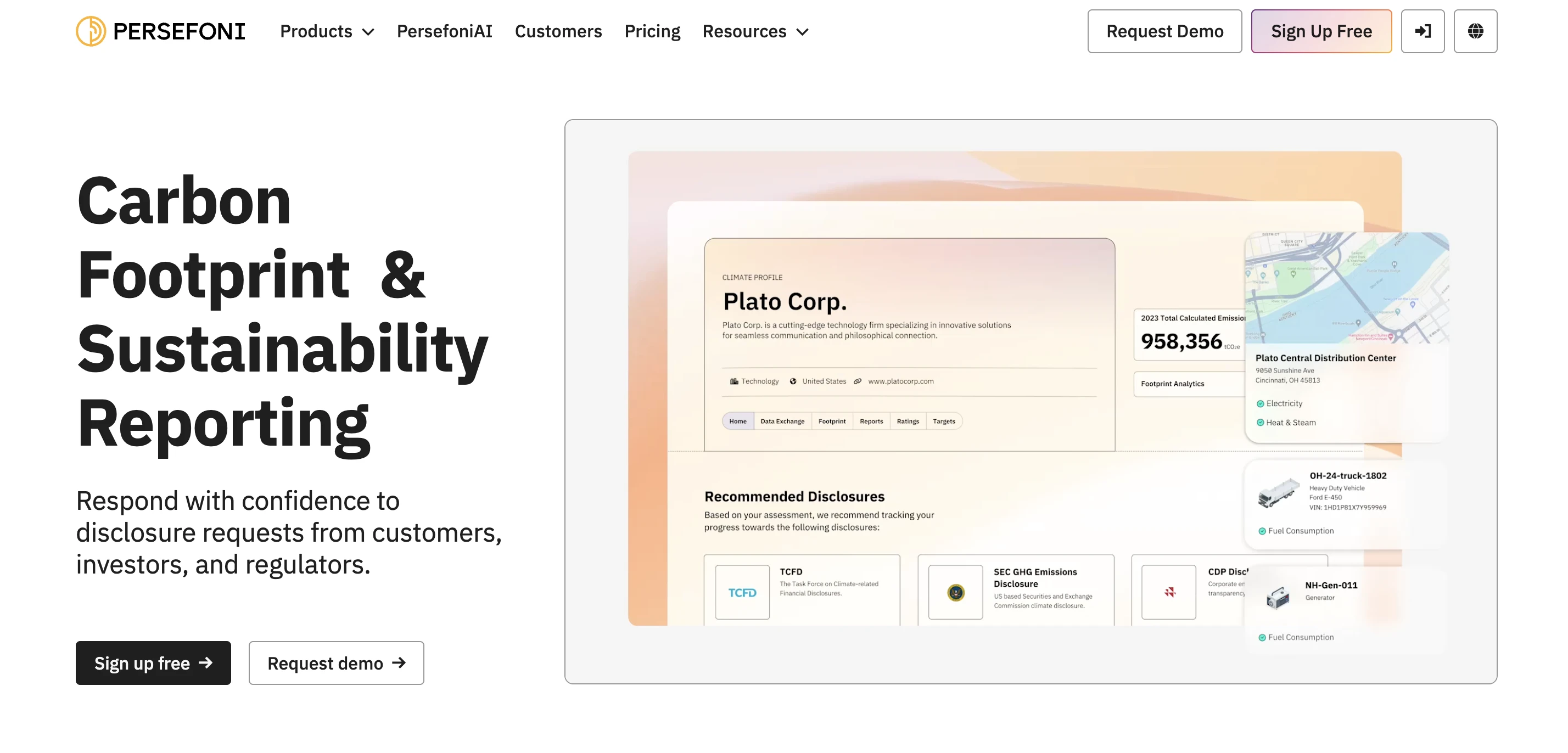
Persefoni is a carbon accounting and climate disclosure platform with a strong emphasis on enterprise-grade emissions reporting.
Services offered:
- Scope 1, 2 and 3 carbon accounting
- Climate disclosure reporting aligned with TCFD and other frameworks
- Emissions data management and calculation tools
- Support for enterprise-scale organisations
Key strengths:
- Deep focus on carbon accounting
- Strong positioning around climate disclosures
- Designed for organisations prioritising emissions measurement
Best for: Enterprises where carbon accounting is the primary sustainability priority and climate disclosure is central to reporting strategy.
3. Diligent ESG
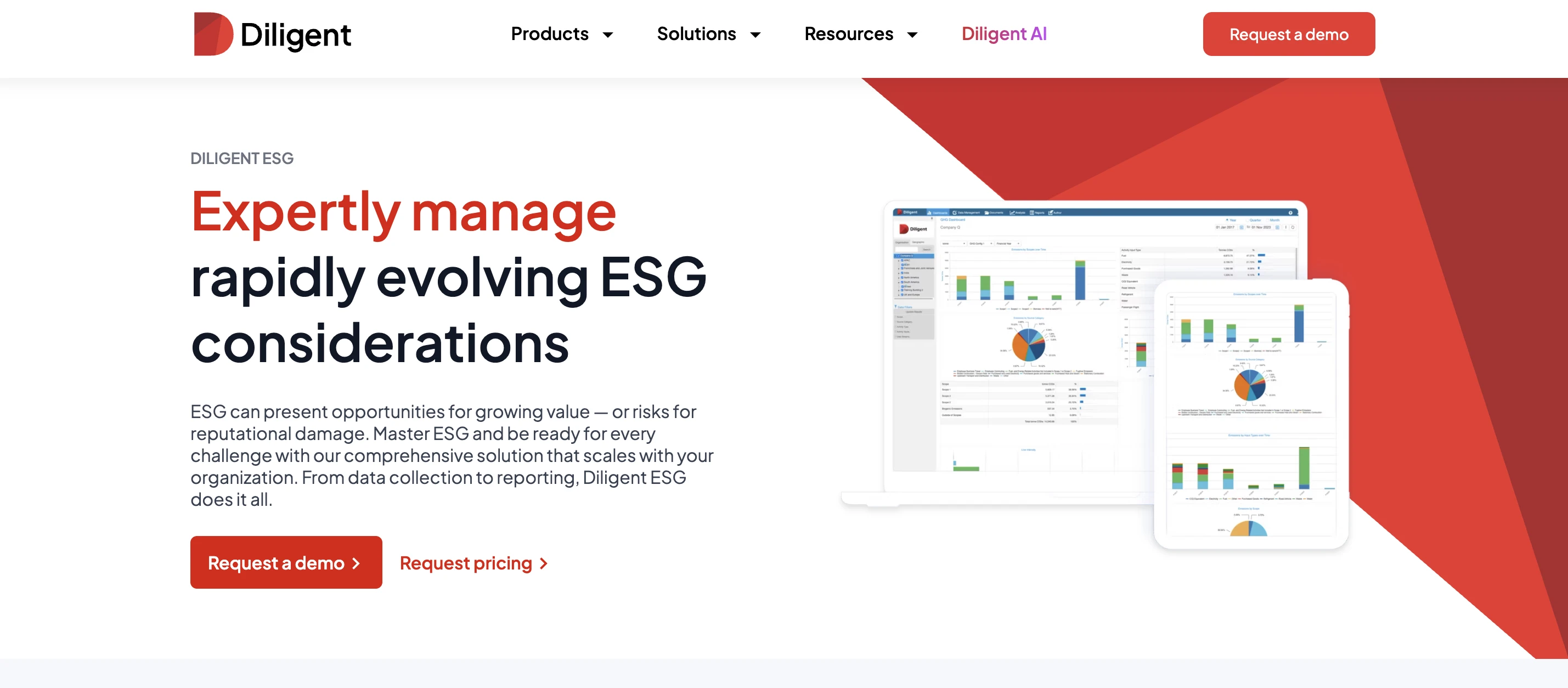
Diligent ESG forms part of Diligent’s broader governance, risk and compliance suite.
Services offered:
- ESG data collection and disclosure tools
- Governance and board reporting capabilities
- Integration with broader risk management processes
Key strengths:
- Strong governance and board-level reporting focus
- Integration with compliance and risk workflows
- Suitable for organisations aligning ESG closely with governance oversight
Best for: Enterprises where board reporting and governance integration are central to the sustainability programme.
4. AMCS ESG Management
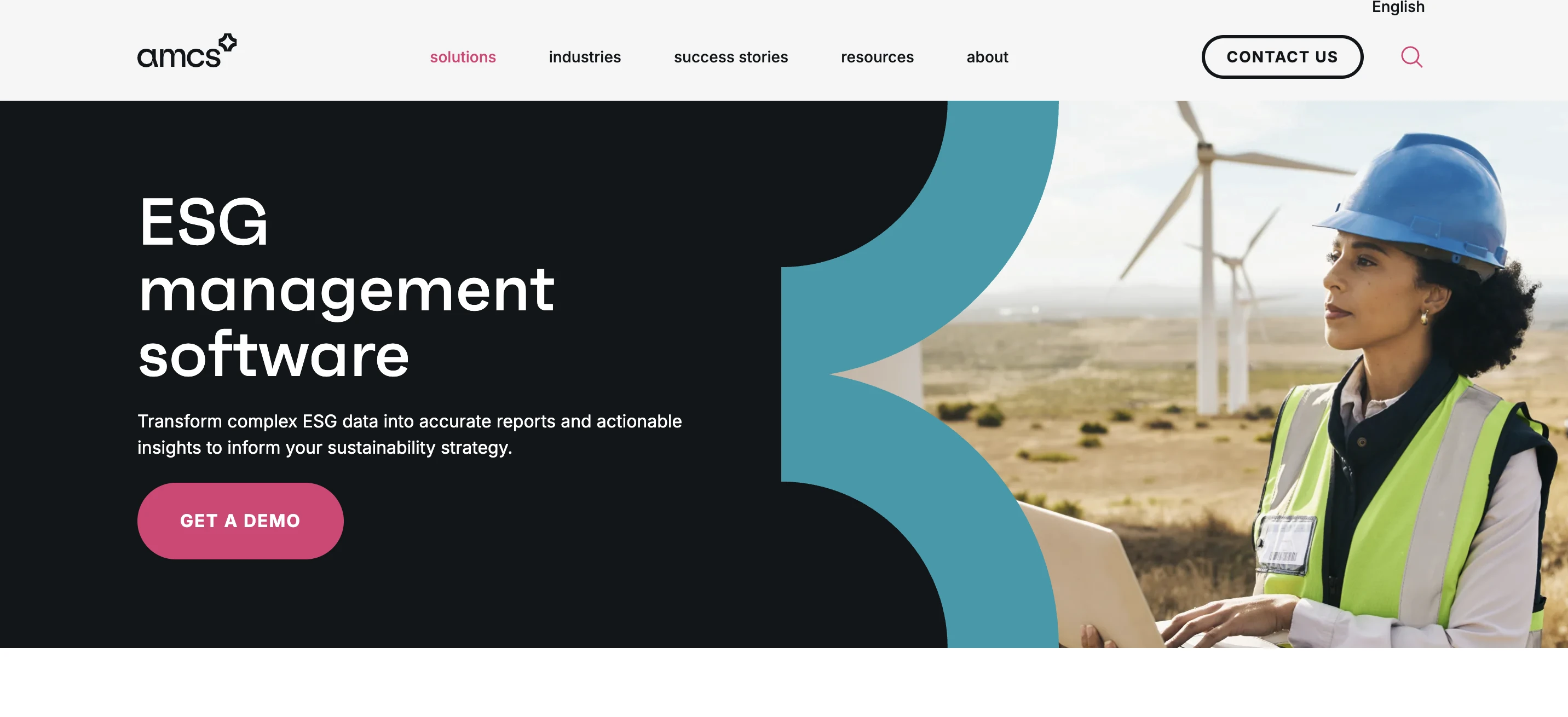
AMCS ESG Management is part of the broader AMCS Group portfolio, which provides enterprise software solutions focused on environmental, waste and resource management.
Services offered:
- ESG and sustainability data collection
- Framework-aligned reporting
- Performance tracking and analytics
- Integration within broader environmental management systems
Key strengths:
- Backed by a large enterprise environmental software provider
- Alignment between operational environmental data and ESG reporting
- Suitable for organisations already embedded in AMCS systems
Best for: Medium and large enterprises seeking sustainability reporting capabilities integrated within a wider environmental or operational management software ecosystem.
5. OneTrust ESG
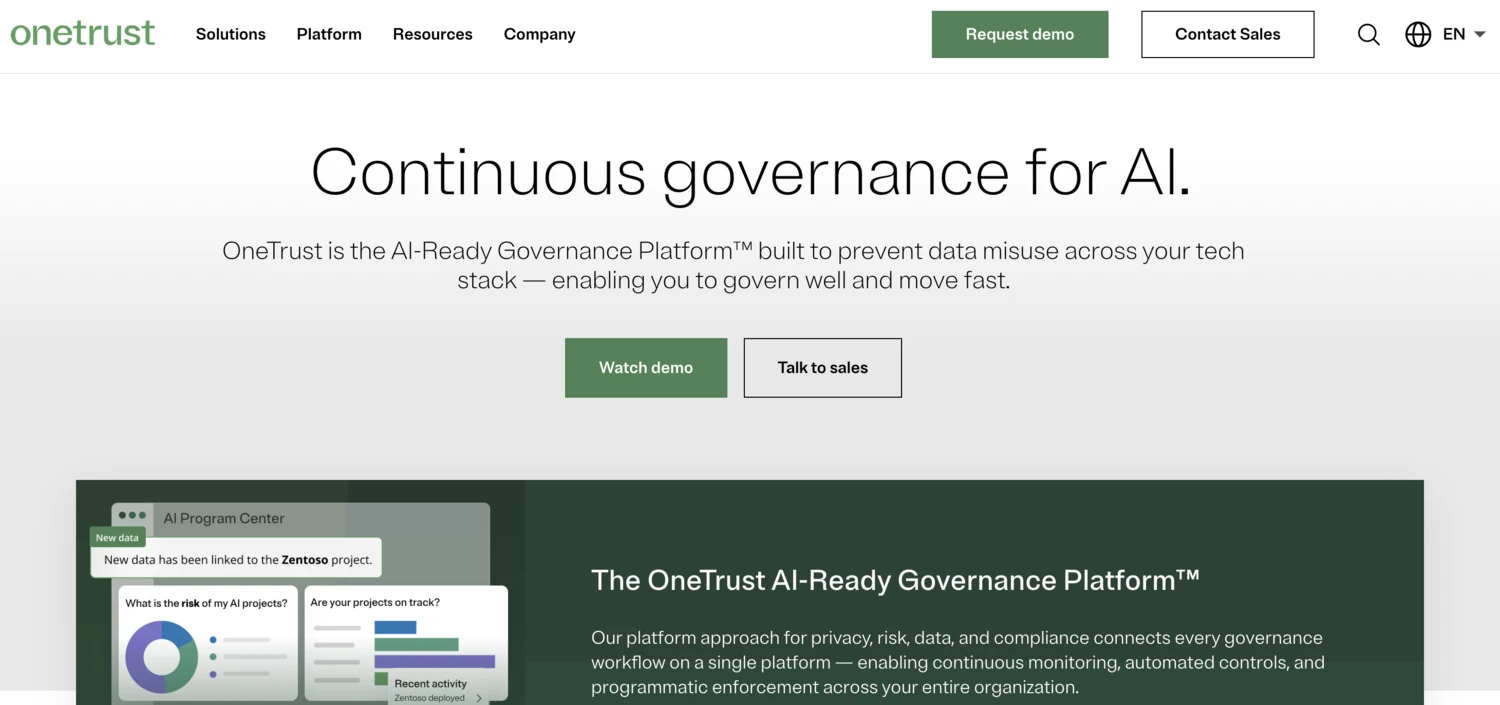
OneTrust ESG is part of the broader OneTrust platform, known for privacy, risk and compliance tools.
Services offered:
- ESG data collection
- Disclosure management
- Integration with risk and compliance systems
Key strengths:
- Integration within a wider compliance ecosystem
- Suitable for organisations already using OneTrust tools
- Governance-focused reporting capabilities
Best for: Enterprises seeking ESG capabilities within an established compliance platform.
6. Sphera
Sphera provides enterprise software focused on environmental performance, risk management and sustainability.
Services offered:
- Sustainability and ESG data management
- Environmental performance tracking
- Risk and compliance integration
Key strengths:
- Strong presence in industrial and manufacturing sectors
- Integration of sustainability with operational risk management
- Suitable for complex, asset-intensive organisations
Best for: Large enterprises seeking sustainability reporting aligned with operational and environmental risk systems.
7. Novisto
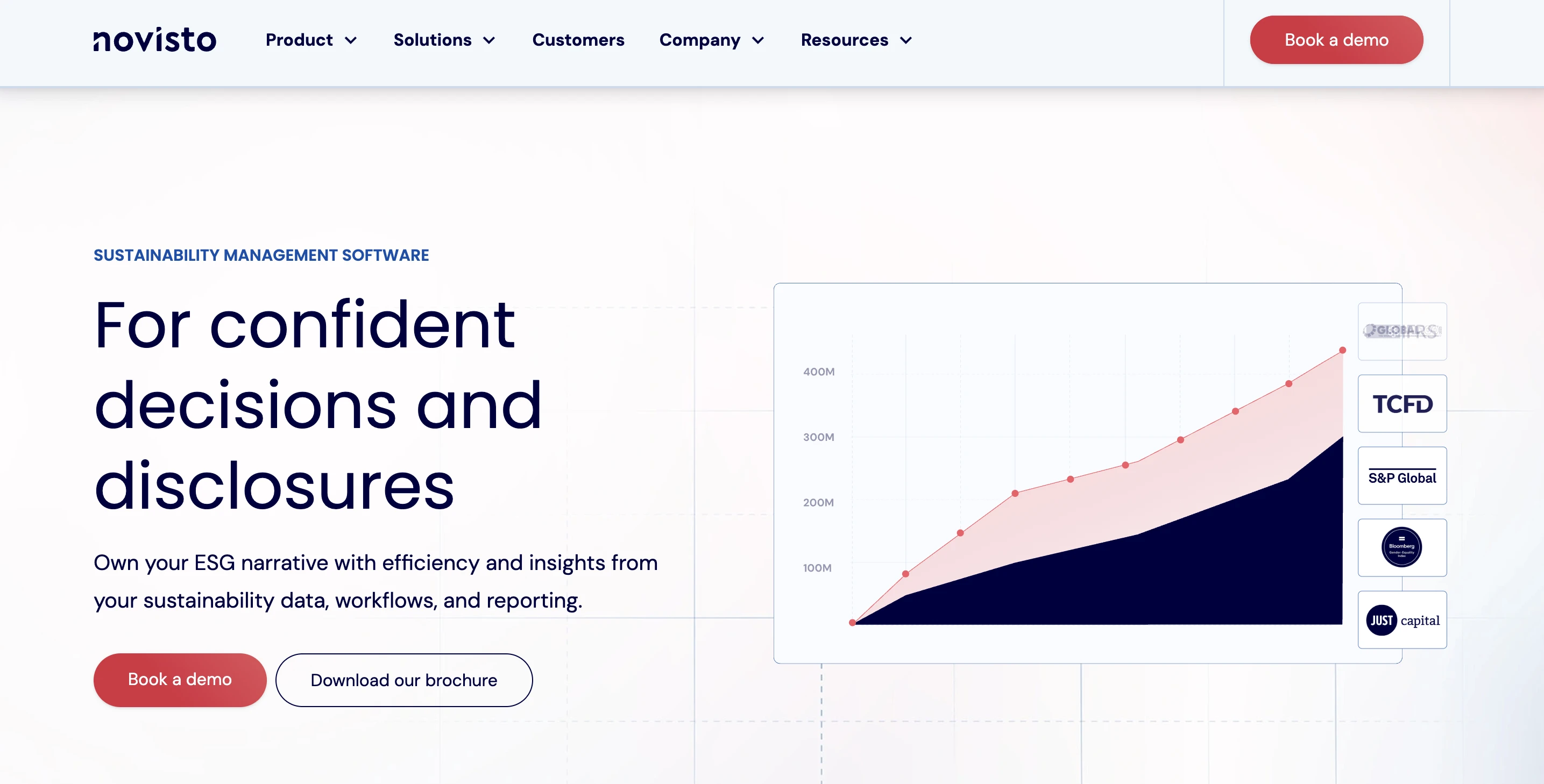
Novisto is an enterprise-focused ESG data management and reporting platform designed to support structured sustainability disclosures across multiple regulatory and voluntary frameworks.
The platform is built around a centralised data architecture that enables organisations to collect, validate and report sustainability information in a controlled and traceable manner.
Services offered:
- ESG and sustainability data collection across departments and entities
- Multi-framework reporting alignment, including global disclosure standards
- Structured disclosure management workflows
- Audit-ready documentation and data traceability
Key strengths:
- Enterprise-oriented ESG data architecture
- Support for multiple reporting frameworks from a central dataset
- Designed to facilitate collaboration between sustainability, finance and compliance teams
- Suitable for organisations preparing for increasing regulatory scrutiny
Best for: Medium and large enterprises seeking a dedicated ESG data management platform to support structured reporting and regulatory alignment across complex organisational structures.
How to evaluate sustainability management software for enterprise use
Selecting a sustainability platform is a structural decision that affects finance, operations and compliance functions. For medium and large enterprises, the evaluation should focus on governance, scalability and long-term regulatory alignment.
Key considerations include:
Finance and sustainability integration
Organisations embedding sustainability within financial reporting processes should assess how closely the platform aligns ESG disclosures with existing finance controls. Integration with reporting cycles, documented approvals and executive oversight structures can reduce duplication and improve disclosure consistency.
Multi-framework reporting architecture
Enterprises often report under CSRD, IFRS S1 and S2, GRI and TCFD simultaneously. Effective systems maintain a structured data model that maps a single dataset across multiple standards, limiting reconciliation effort and reducing inconsistency between disclosures.
Carbon accounting depth
As climate reporting becomes more detailed, platforms should support comprehensive Scope 1, 2 and 3 emissions accounting aligned with the GHG Protocol. Enterprises with complex value chains require visibility across all 15 Scope 3 categories supported by transparent methodologies.
Governance and audit readiness
Sustainability data increasingly faces assurance and regulatory scrutiny. Systems should provide documented workflows, change tracking, evidence storage and structured export capabilities to support audit processes at enterprise scale.
Organisational scalability
Large organisations operate across multiple subsidiaries and jurisdictions. The platform must maintain consistent data structures while enabling central oversight and distributed data ownership without creating consolidation bottlenecks.
Final thoughts
Workiva is a well-established platform with strong credentials in financial and regulatory reporting. For enterprises seeking integrated finance and sustainability disclosures within a single reporting environment, the platform can be a viable solution.
At the same time, sustainability reporting has evolved into an operational discipline requiring detailed carbon accounting, cross-functional workflows and multi-framework data management. For enterprise sustainability teams looking for a system built specifically around these requirements, KEY ESG could be the perfect choice.
KEY ESG provides a sustainability-native platform built around a unified data model that supports multi-framework reporting from a single controlled dataset. It combines full Scope 1, 2 and 3 carbon accounting across all 15 Scope 3 categories with structured workflows, evidence management and audit trails designed for enterprise-scale governance.
If your team is reassessing its sustainability reporting infrastructure, it may be time to evaluate whether a dedicated sustainability system better supports your long-term requirements.
Request a demo to explore how KEY ESG supports enterprise sustainability teams.
Medium and large corporate enterprises face increasing regulatory and assurance requirements across sustainability and climate reporting. Organisations with 1,000+ employees and multi-entity operating structures must coordinate data across finance, procurement, operations, HR and compliance functions, while preparing for external scrutiny under frameworks such as CSRD and IFRS S1 and S2.
Workiva is a recognised platform in financial and regulatory reporting. For some enterprises, extending it into sustainability reporting aligns well with existing governance structures. For others, sustainability reporting has evolved into a discipline that requires a dedicated management system built around carbon accounting, structured workflows and multi-framework data control.
This guide reviews Workiva, explains why some medium and large enterprises assess alternatives, and outlines seven sustainability management platforms to consider.
The TL;DR - Summary of alternatives
Workiva overview
Workiva describes itself as a platform for data-driven finance, risk and sustainability. It is widely used by large enterprises for financial reporting, regulatory filings, and internal controls.
In sustainability reporting, Workiva supports:
- ESG and sustainability disclosures
- Integration with financial reporting processes
- Data aggregation and structured reporting outputs
- Collaboration across teams
Workiva is particularly attractive to organisations that already rely on it for financial reporting. In those cases, sustainability reporting can sit within an existing governance and disclosure environment.
For enterprises seeking tight alignment between finance, risk and sustainability, this integrated model can be compelling.
When enterprise sustainability teams review their reporting systems
As sustainability reporting requirements expand, medium and large enterprises periodically reassess whether their existing systems support long-term regulatory, operational and assurance needs.
As reporting moves toward finance-grade scrutiny, sustainability leaders assess whether their current platform supports structured data governance at enterprise scale.
Common evaluation criteria include the following.
Sustainability reporting moving beyond disclosure
In many organisations, sustainability reporting began as a narrative exercise. It now involves:
- Detailed Scope 1, 2 and 3 carbon accounting
- Activity data collection across multiple sites and subsidiaries
- Supporting evidence for each reported datapoint
- Documented approvals and change logs
Where reporting processes rely heavily on spreadsheets or external advisory support, scaling to meet regulatory requirements becomes operationally complex.
Medium and large enterprises frequently look for systems designed around structured sustainability workflows rather than disclosure output alone.
Increasing Scope 3 exposure
For organisations with global supply chains, complex procurement structures or distributed operations, Scope 3 emissions represent the largest share of total emissions. Managing all 15 Scope 3 categories under the GHG Protocol requires:
- Consistent activity data capture
- Emission factor management
- Assumption tracking
- Clear audit documentation
As carbon accounting moves closer to financial-grade scrutiny, calculation transparency and traceability become central requirements.
Cross-functional data ownership
In enterprises with a turnover above €100m, sustainability data does not sit in a single department. Finance, operations, procurement and compliance teams all contribute inputs.
Sustainability leaders require structured workflows that:
- Assign responsibility
- Track submission status
- Store evidence centrally
- Maintain version history
This level of governance demands a system built for enterprise coordination.
Multi-framework obligations from a single dataset
Enterprises may report against:
Managing these frameworks independently increases the risk of duplication and reconciliation. Many organisations now seek platforms that maintain a single, structured data model and map datasets across multiple standards.
7 alternatives to Workiva
Below are seven platforms enterprise sustainability teams frequently consider when reviewing alternatives to Workiva.
1. KEY ESG
KEY ESG is a sustainability management software platform designed for medium to large enterprises and investment firms. It focuses on audit-ready, multi-framework sustainability and carbon accounting workflows, owned and managed in-house by business teams.
Services offered:
- Centralised sustainability data collection across entities and sites
- Full Scope 1, 2 and 3 carbon accounting
- Access to 70,000+ emission factors from recognised sources, including DEFRA and the US EPA
- Mapping to frameworks such as CSRD, IFRS S1/S2, SFDR, TCFD, CDP, GRI, Invest Europe, EDCI, and California Climate Laws
- Built for compliance with approvals, evidence management and audit trails
Key strengths:
- Designed specifically for sustainability workflows rather than general reporting
- Unified data model supporting multiple frameworks from a single dataset
- Strong Scope 3 coverage for complex value chains
- Supports unlimited entities and organisational structures
- Built for finance, operations, compliance and investor relations teams
Best for: Enterprise sustainability teams that want a dedicated sustainability system combining carbon accounting, regulatory reporting and operational performance tracking within a single platform.
2. Persefoni
Persefoni is a carbon accounting and climate disclosure platform with a strong emphasis on enterprise-grade emissions reporting.
Services offered:
- Scope 1, 2 and 3 carbon accounting
- Climate disclosure reporting aligned with TCFD and other frameworks
- Emissions data management and calculation tools
- Support for enterprise-scale organisations
Key strengths:
- Deep focus on carbon accounting
- Strong positioning around climate disclosures
- Designed for organisations prioritising emissions measurement
Best for: Enterprises where carbon accounting is the primary sustainability priority and climate disclosure is central to reporting strategy.
3. Diligent ESG
Diligent ESG forms part of Diligent’s broader governance, risk and compliance suite.
Services offered:
- ESG data collection and disclosure tools
- Governance and board reporting capabilities
- Integration with broader risk management processes
Key strengths:
- Strong governance and board-level reporting focus
- Integration with compliance and risk workflows
- Suitable for organisations aligning ESG closely with governance oversight
Best for: Enterprises where board reporting and governance integration are central to the sustainability programme.
4. AMCS ESG Management
AMCS ESG Management is part of the broader AMCS Group portfolio, which provides enterprise software solutions focused on environmental, waste and resource management.
Services offered:
- ESG and sustainability data collection
- Framework-aligned reporting
- Performance tracking and analytics
- Integration within broader environmental management systems
Key strengths:
- Backed by a large enterprise environmental software provider
- Alignment between operational environmental data and ESG reporting
- Suitable for organisations already embedded in AMCS systems
Best for: Medium and large enterprises seeking sustainability reporting capabilities integrated within a wider environmental or operational management software ecosystem.
5. OneTrust ESG
OneTrust ESG is part of the broader OneTrust platform, known for privacy, risk and compliance tools.
Services offered:
- ESG data collection
- Disclosure management
- Integration with risk and compliance systems
Key strengths:
- Integration within a wider compliance ecosystem
- Suitable for organisations already using OneTrust tools
- Governance-focused reporting capabilities
Best for: Enterprises seeking ESG capabilities within an established compliance platform.
6. Sphera
Sphera provides enterprise software focused on environmental performance, risk management and sustainability.
Services offered:
- Sustainability and ESG data management
- Environmental performance tracking
- Risk and compliance integration
Key strengths:
- Strong presence in industrial and manufacturing sectors
- Integration of sustainability with operational risk management
- Suitable for complex, asset-intensive organisations
Best for: Large enterprises seeking sustainability reporting aligned with operational and environmental risk systems.
7. Novisto
Novisto is an enterprise-focused ESG data management and reporting platform designed to support structured sustainability disclosures across multiple regulatory and voluntary frameworks.
The platform is built around a centralised data architecture that enables organisations to collect, validate and report sustainability information in a controlled and traceable manner.
Services offered:
- ESG and sustainability data collection across departments and entities
- Multi-framework reporting alignment, including global disclosure standards
- Structured disclosure management workflows
- Audit-ready documentation and data traceability
Key strengths:
- Enterprise-oriented ESG data architecture
- Support for multiple reporting frameworks from a central dataset
- Designed to facilitate collaboration between sustainability, finance and compliance teams
- Suitable for organisations preparing for increasing regulatory scrutiny
Best for: Medium and large enterprises seeking a dedicated ESG data management platform to support structured reporting and regulatory alignment across complex organisational structures.
How to evaluate sustainability management software for enterprise use
Selecting a sustainability platform is a structural decision that affects finance, operations and compliance functions. For medium and large enterprises, the evaluation should focus on governance, scalability and long-term regulatory alignment.
Key considerations include:
Finance and sustainability integration
Organisations embedding sustainability within financial reporting processes should assess how closely the platform aligns ESG disclosures with existing finance controls. Integration with reporting cycles, documented approvals and executive oversight structures can reduce duplication and improve disclosure consistency.
Multi-framework reporting architecture
Enterprises often report under CSRD, IFRS S1 and S2, GRI and TCFD simultaneously. Effective systems maintain a structured data model that maps a single dataset across multiple standards, limiting reconciliation effort and reducing inconsistency between disclosures.
Carbon accounting depth
As climate reporting becomes more detailed, platforms should support comprehensive Scope 1, 2 and 3 emissions accounting aligned with the GHG Protocol. Enterprises with complex value chains require visibility across all 15 Scope 3 categories supported by transparent methodologies.
Governance and audit readiness
Sustainability data increasingly faces assurance and regulatory scrutiny. Systems should provide documented workflows, change tracking, evidence storage and structured export capabilities to support audit processes at enterprise scale.
Organisational scalability
Large organisations operate across multiple subsidiaries and jurisdictions. The platform must maintain consistent data structures while enabling central oversight and distributed data ownership without creating consolidation bottlenecks.
Final thoughts
Workiva is a well-established platform with strong credentials in financial and regulatory reporting. For enterprises seeking integrated finance and sustainability disclosures within a single reporting environment, the platform can be a viable solution.
At the same time, sustainability reporting has evolved into an operational discipline requiring detailed carbon accounting, cross-functional workflows and multi-framework data management. For enterprise sustainability teams looking for a system built specifically around these requirements, KEY ESG could be the perfect choice.
KEY ESG provides a sustainability-native platform built around a unified data model that supports multi-framework reporting from a single controlled dataset. It combines full Scope 1, 2 and 3 carbon accounting across all 15 Scope 3 categories with structured workflows, evidence management and audit trails designed for enterprise-scale governance.
If your team is reassessing its sustainability reporting infrastructure, it may be time to evaluate whether a dedicated sustainability system better supports your long-term requirements.
Request a demo to explore how KEY ESG supports enterprise sustainability teams.