Supply chain due diligence has become a central part of enterprise sustainability strategy. For organisations operating across complex global value chains, regulatory exposure no longer stops at internal operations. Requirements under CSDDD, CSRD and the EU Deforestation Regulation extend accountability deep into supplier networks.
Osapiens positions its platform as a unified system for managing sustainability reporting and supply chain compliance within a single digital environment. By combining ESG data management with supplier transparency and risk monitoring, it aims to support enterprises navigating regulatory complexity across multiple jurisdictions.
For sustainability and procurement leaders reviewing how their organisation manages supplier risk, regulatory reporting and governance at scale, alternative platforms may also warrant evaluation. This guide outlines six enterprise-focused options frequently considered alongside Osapiens.
The TL;DR - Summary of alternatives
Osapiens overview
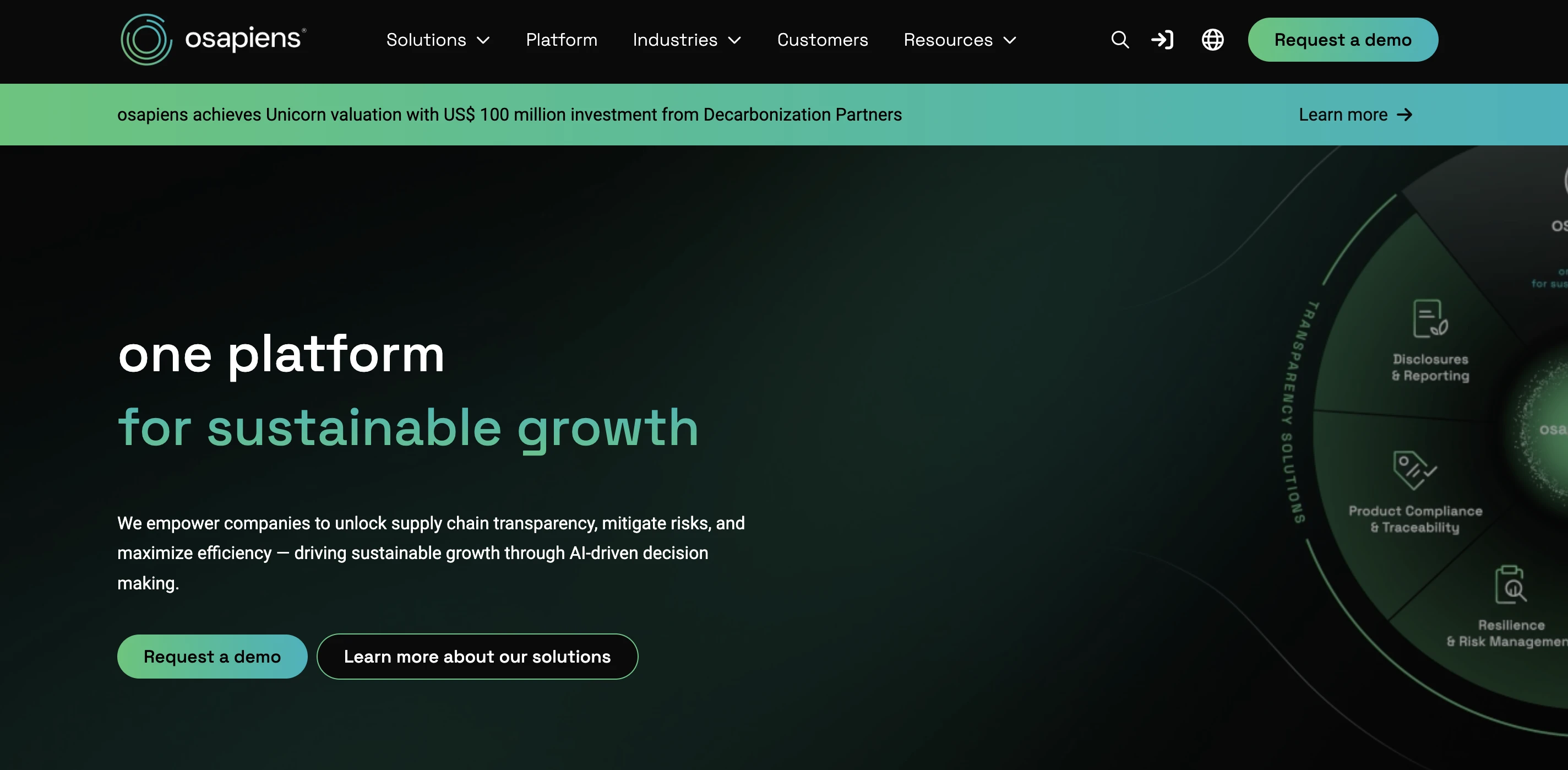
Osapiens offers a cloud-based platform designed to help organisations manage sustainability initiatives and supply chain compliance through its Osapiens HUB.
The platform supports:
- Supply chain transparency across extended value chains
- Automated sustainability reporting aligned with CSRD, GRI and ISSB
- Supplier risk identification using AI-driven analysis
- Compliance with regulations such as CSDDD and EUDR
- Process optimisation for ESG and supplier management workflows
Its focus is on integrating sustainability reporting with operational supply chain visibility. This helps enterprises address regulatory requirements and risk exposure within a unified system.
When enterprises review sustainability and supply chain compliance platforms
As sustainability regulations expand across the EU and other jurisdictions, enterprise organisations increasingly evaluate whether their current systems support both internal reporting and supplier oversight.
This reassessment is typically driven by:
- CSRD implementation timelines
- CSDDD due diligence obligations
- EUDR traceability requirements
- Increased external assurance scrutiny
- Growth in supplier networks and global sourcing complexity
For enterprises operating across multiple subsidiaries and jurisdictions, sustainability management extends beyond disclosure preparation. It becomes a structured governance function spanning procurement, compliance, finance and operations.
Key evaluation themes often include the following.
Supply chain traceability at scale
Enterprises with global supplier networks must collect, validate and monitor supplier-related sustainability data across tiers.
This may involve:
- Supplier questionnaires and declarations
- Risk screening across geographies and commodities
- Documentation of due diligence processes
- Ongoing monitoring of regulatory exposure
The ability to structure and document these processes within a controlled system is central to regulatory alignment.
Multi-framework sustainability reporting
Beyond supply chain transparency, enterprises must prepare disclosures aligned with frameworks such as:
- CSRD
- IFRS S1 and S2
- GRI
Maintaining separate reporting systems increases duplication and reconciliation effort. Many organisations evaluate platforms capable of mapping a single dataset across multiple disclosure requirements.
Governance and audit readiness
Sustainability and supply chain compliance increasingly require documented evidence and clear data lineage.
Enterprise teams assess whether a system:
- Maintains change history
- Supports internal approvals
- Stores supporting documentation
- Provides structured exports for assurance
Governance controls become essential as sustainability data moves closer to financial-grade oversight.
6 alternatives to Osapiens
Below are six platforms enterprises frequently consider when reviewing alternatives to Osapiens.
1. KEY ESG
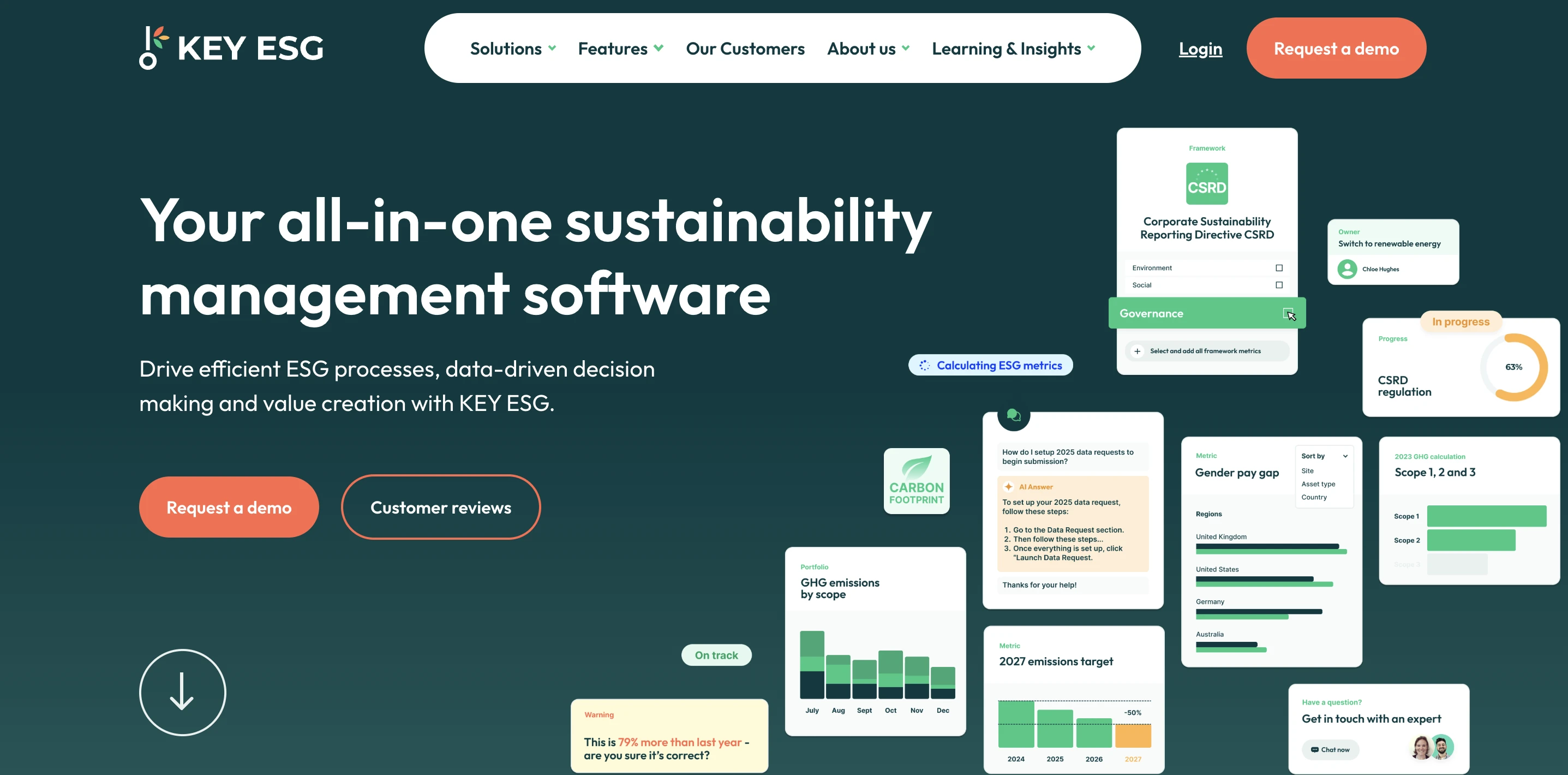
KEY ESG is a sustainability management software platform designed for medium and large enterprises that require structured sustainability and carbon accounting workflows managed internally.
The platform supports enterprise-scale reporting and governance across subsidiaries, departments and supplier-facing processes.
Services offered:
- Centralised sustainability data collection across entities and sites
- Full Scope 1, 2 and 3 carbon accounting across all 15 Scope 3 categories
- Mapping to CSRD, IFRS S1/S2, SFDR, TCFD, CDP, GRI, Invest Europe, EDCI, and California Climate Laws within a single system
- Structured workflows with approvals, evidence management and audit trails
- Consolidated reporting across complex organisational structures
Key strengths:
- Unified data model supporting multiple frameworks from a single dataset
- Carbon accounting aligned with the GHG Protocol
- Designed for finance, procurement, compliance and operations collaboration
- Supports internal ownership of sustainability governance
Best for: Medium and large corporate enterprises seeking a dedicated sustainability management system that combines multi-framework reporting, carbon accounting and structured governance across complex organisations.
2. IntegrityNext
IntegrityNext focuses on supply chain sustainability and compliance management, particularly in relation to regulatory due diligence requirements.
Services offered:
- Supplier risk screening and monitoring
- Due diligence documentation workflows
- Compliance support aligned with European supply chain regulations
- Supplier engagement tools
Key strengths:
- Strong emphasis on supply chain due diligence
- Alignment with regulations such as CSDDD
- Designed to support large supplier networks
Best for: Enterprises prioritising supplier compliance monitoring and regulatory due diligence within global supply chains.
3. EcoVadis
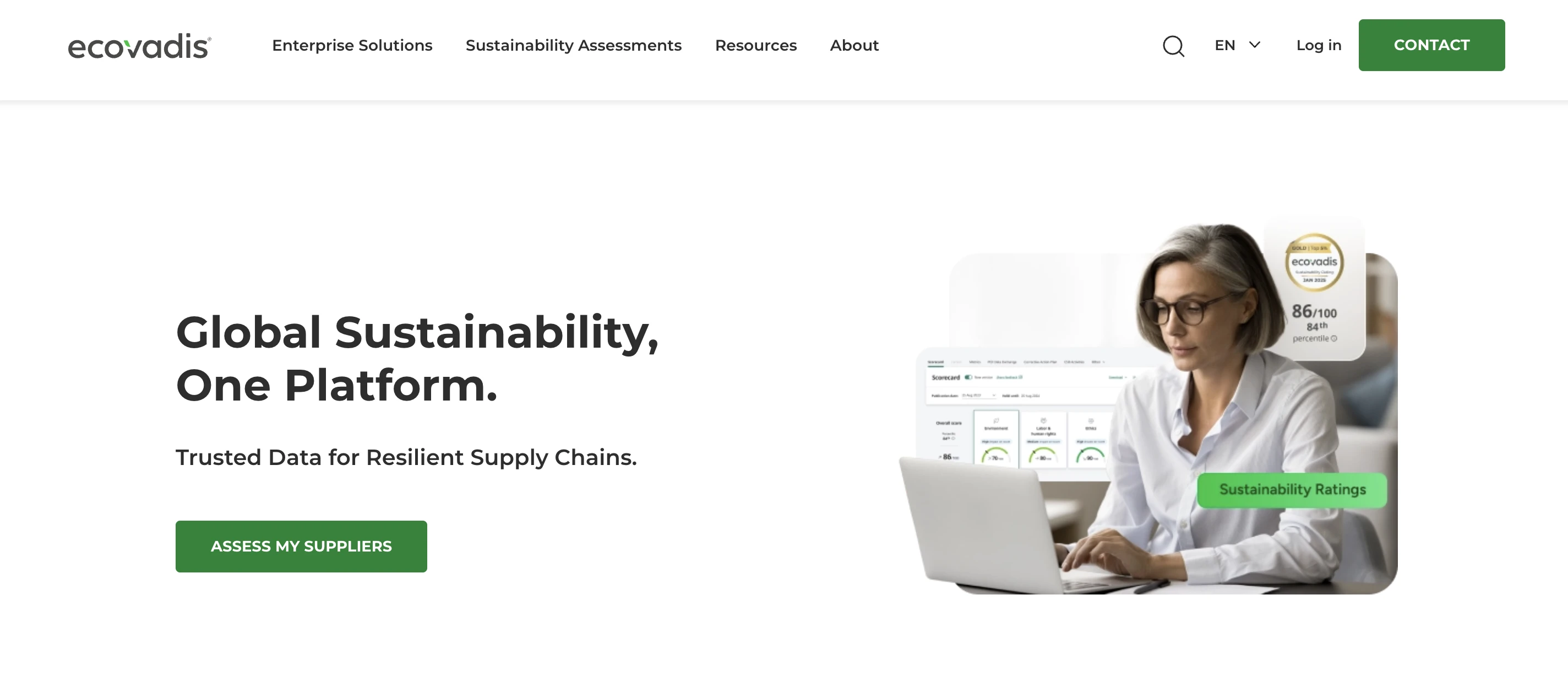
EcoVadis provides sustainability ratings and monitoring for suppliers across global value chains.
Services offered:
- Supplier sustainability assessments
- Risk and performance scoring
- Monitoring of ESG practices across supply chains
- Benchmarking against industry standards
Key strengths:
- Extensive supplier network coverage
- Established supplier assessment methodology
- Useful for procurement-led sustainability initiatives
Best for: Organisations seeking structured supplier sustainability ratings and benchmarking tools.
4. Sphera
Sphera provides enterprise software focused on environmental performance, operational risk and sustainability management.
Services offered:
- Environmental data management
- Risk and compliance integration
- Sustainability performance tracking
- Support for regulatory reporting
Key strengths:
- Strong presence in industrial and asset-intensive sectors
- Integration of environmental risk and sustainability oversight
- Suitable for complex, global enterprises
Best for: Large organisations requiring alignment between environmental risk management and sustainability reporting.
5. Assent
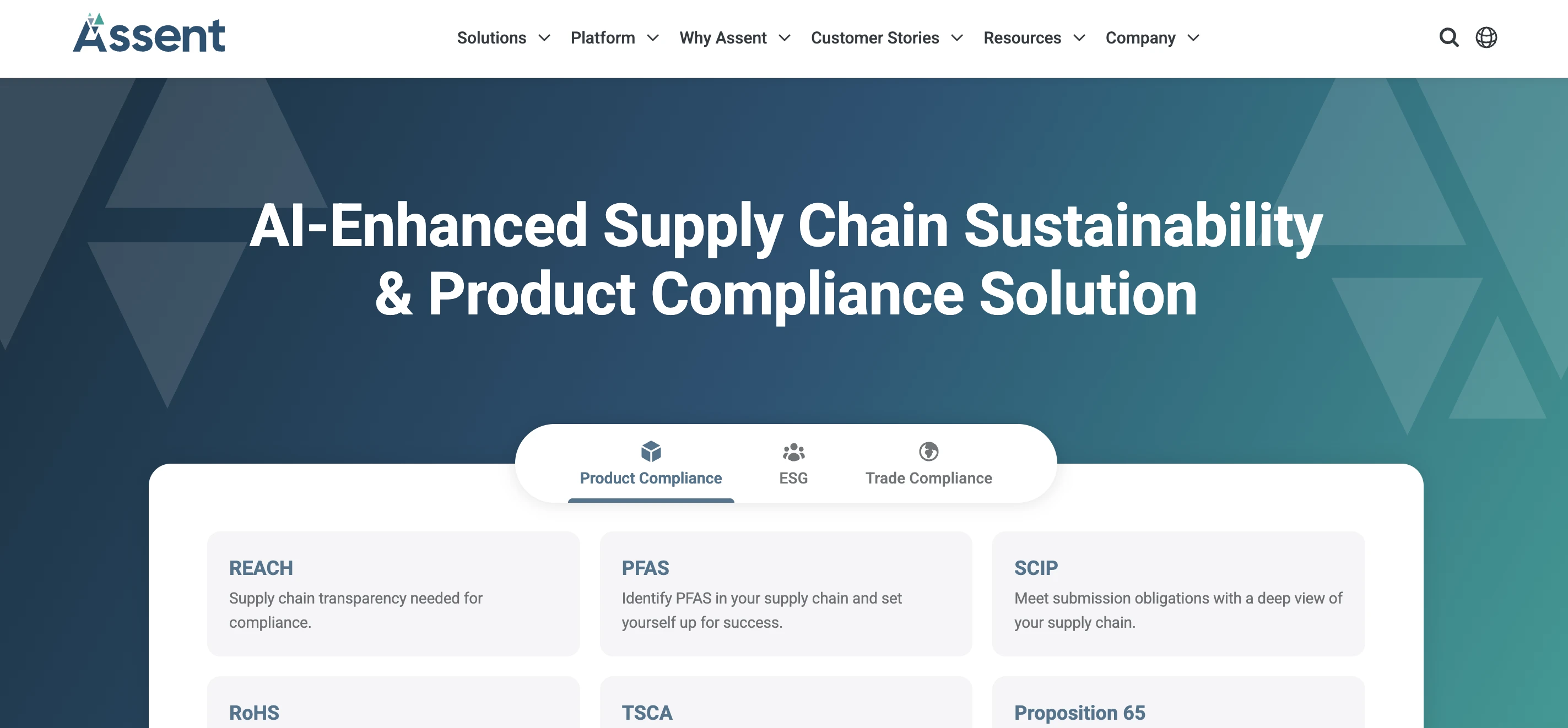
Assent provides supply chain compliance and risk management software designed to help enterprises manage regulatory obligations across global supplier networks.
The platform focuses on collecting, validating and monitoring supplier data to support due diligence and product compliance requirements.
Services offered:
- Supplier onboarding and data collection workflows
- Regulatory compliance monitoring across supply chains
- Risk identification and mitigation tools
- Documentation management to support audit and reporting requirements
Key strengths:
- Strong focus on supply chain compliance and regulatory oversight
- Designed to support large, complex supplier networks
- Alignment with evolving global due diligence requirements
Best for: Medium and large enterprises seeking structured supplier compliance and risk management tools to support regulatory and due diligence obligations across global value chains.
6. AMCS ESG Management
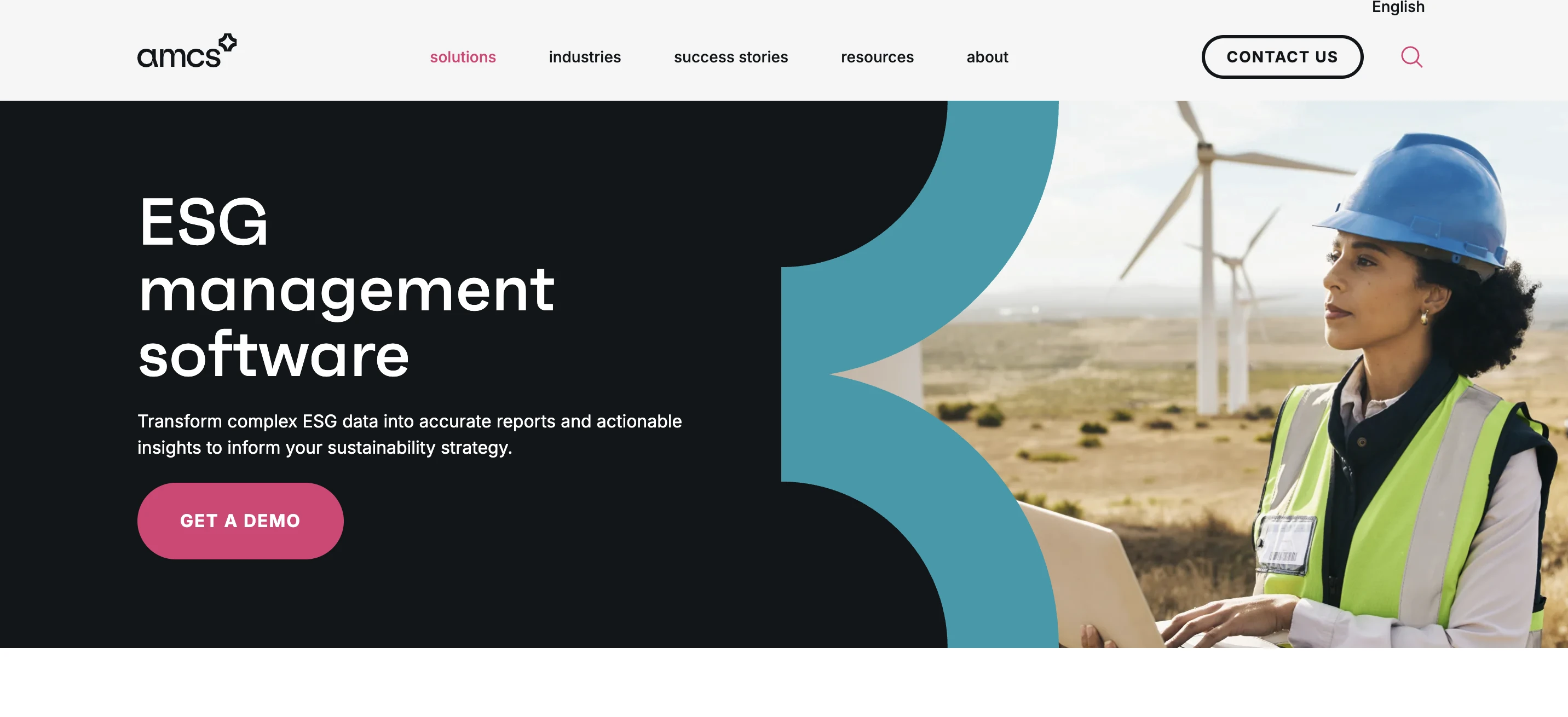
AMCS ESG Management is part of the broader AMCS enterprise software portfolio, which focuses on environmental and operational systems.
Services offered:
- ESG data collection and consolidation
- Sustainability reporting support
- Integration with environmental management systems
- Performance tracking across operations
Key strengths:
- Alignment between operational environmental data and sustainability reporting
- Backed by an established enterprise software provider
- Suitable for organisations embedded in environmental management ecosystems
Best for: Enterprises seeking sustainability reporting capabilities integrated within broader environmental and operational systems.
How to evaluate sustainability and supply chain platforms for enterprise use
Selecting a sustainability and supply chain compliance platform is a structural decision affecting procurement, compliance, finance and operations.
For medium and large enterprises, evaluation should focus on several considerations.
Supply chain transparency at scale
Enterprises with global value chains should assess whether the platform supports multi-tier supplier visibility, structured data collection and documented monitoring processes across regions and commodities.
Regulatory due diligence alignment
With obligations under CSRD, CSDDD and EUDR, systems must support traceable documentation of risk assessments, supplier declarations and compliance workflows. Clear audit trails and evidence storage are essential to demonstrate regulatory alignment.
Integrated sustainability reporting
Beyond supplier oversight, the platform should support multi-framework sustainability disclosures from a unified dataset, reducing duplication between operational compliance and reporting processes.
Governance controls and audit readiness
As sustainability and supply chain data face increased scrutiny, platforms must provide approval workflows, change logs and structured exports suitable for assurance review and executive oversight.
Cross-functional collaboration
Supplier compliance and sustainability reporting involve procurement, compliance, finance and sustainability teams. The system should enable coordinated workflows and clear accountability across departments.
Final thoughts
Osapiens provides an integrated platform for managing sustainability reporting and supply chain compliance, with a strong emphasis on transparency across value chains and regulatory alignment.
As due diligence requirements expand and sustainability data becomes subject to greater scrutiny, many enterprises review how effectively their systems support supplier oversight, structured reporting and cross-functional governance.
If your organisation is evaluating its sustainability and supply chain compliance infrastructure, assessing whether your current platform provides the depth of governance and carbon accounting required at enterprise scale is a practical next step.
Request a demo to see how KEY ESG supports structured sustainability management across complex organisations.
Supply chain due diligence has become a central part of enterprise sustainability strategy. For organisations operating across complex global value chains, regulatory exposure no longer stops at internal operations. Requirements under CSDDD, CSRD and the EU Deforestation Regulation extend accountability deep into supplier networks.
Osapiens positions its platform as a unified system for managing sustainability reporting and supply chain compliance within a single digital environment. By combining ESG data management with supplier transparency and risk monitoring, it aims to support enterprises navigating regulatory complexity across multiple jurisdictions.
For sustainability and procurement leaders reviewing how their organisation manages supplier risk, regulatory reporting and governance at scale, alternative platforms may also warrant evaluation. This guide outlines six enterprise-focused options frequently considered alongside Osapiens.
The TL;DR - Summary of alternatives
Osapiens overview
Osapiens offers a cloud-based platform designed to help organisations manage sustainability initiatives and supply chain compliance through its Osapiens HUB.
The platform supports:
- Supply chain transparency across extended value chains
- Automated sustainability reporting aligned with CSRD, GRI and ISSB
- Supplier risk identification using AI-driven analysis
- Compliance with regulations such as CSDDD and EUDR
- Process optimisation for ESG and supplier management workflows
Its focus is on integrating sustainability reporting with operational supply chain visibility. This helps enterprises address regulatory requirements and risk exposure within a unified system.
When enterprises review sustainability and supply chain compliance platforms
As sustainability regulations expand across the EU and other jurisdictions, enterprise organisations increasingly evaluate whether their current systems support both internal reporting and supplier oversight.
This reassessment is typically driven by:
- CSRD implementation timelines
- CSDDD due diligence obligations
- EUDR traceability requirements
- Increased external assurance scrutiny
- Growth in supplier networks and global sourcing complexity
For enterprises operating across multiple subsidiaries and jurisdictions, sustainability management extends beyond disclosure preparation. It becomes a structured governance function spanning procurement, compliance, finance and operations.
Key evaluation themes often include the following.
Supply chain traceability at scale
Enterprises with global supplier networks must collect, validate and monitor supplier-related sustainability data across tiers.
This may involve:
- Supplier questionnaires and declarations
- Risk screening across geographies and commodities
- Documentation of due diligence processes
- Ongoing monitoring of regulatory exposure
The ability to structure and document these processes within a controlled system is central to regulatory alignment.
Multi-framework sustainability reporting
Beyond supply chain transparency, enterprises must prepare disclosures aligned with frameworks such as:
- CSRD
- IFRS S1 and S2
- GRI
Maintaining separate reporting systems increases duplication and reconciliation effort. Many organisations evaluate platforms capable of mapping a single dataset across multiple disclosure requirements.
Governance and audit readiness
Sustainability and supply chain compliance increasingly require documented evidence and clear data lineage.
Enterprise teams assess whether a system:
- Maintains change history
- Supports internal approvals
- Stores supporting documentation
- Provides structured exports for assurance
Governance controls become essential as sustainability data moves closer to financial-grade oversight.
6 alternatives to Osapiens
Below are six platforms enterprises frequently consider when reviewing alternatives to Osapiens.
1. KEY ESG
KEY ESG is a sustainability management software platform designed for medium and large enterprises that require structured sustainability and carbon accounting workflows managed internally.
The platform supports enterprise-scale reporting and governance across subsidiaries, departments and supplier-facing processes.
Services offered:
- Centralised sustainability data collection across entities and sites
- Full Scope 1, 2 and 3 carbon accounting across all 15 Scope 3 categories
- Mapping to CSRD, IFRS S1/S2, SFDR, TCFD, CDP, GRI, Invest Europe, EDCI, and California Climate Laws within a single system
- Structured workflows with approvals, evidence management and audit trails
- Consolidated reporting across complex organisational structures
Key strengths:
- Unified data model supporting multiple frameworks from a single dataset
- Carbon accounting aligned with the GHG Protocol
- Designed for finance, procurement, compliance and operations collaboration
- Supports internal ownership of sustainability governance
Best for: Medium and large corporate enterprises seeking a dedicated sustainability management system that combines multi-framework reporting, carbon accounting and structured governance across complex organisations.
2. IntegrityNext
IntegrityNext focuses on supply chain sustainability and compliance management, particularly in relation to regulatory due diligence requirements.
Services offered:
- Supplier risk screening and monitoring
- Due diligence documentation workflows
- Compliance support aligned with European supply chain regulations
- Supplier engagement tools
Key strengths:
- Strong emphasis on supply chain due diligence
- Alignment with regulations such as CSDDD
- Designed to support large supplier networks
Best for: Enterprises prioritising supplier compliance monitoring and regulatory due diligence within global supply chains.
3. EcoVadis
EcoVadis provides sustainability ratings and monitoring for suppliers across global value chains.
Services offered:
- Supplier sustainability assessments
- Risk and performance scoring
- Monitoring of ESG practices across supply chains
- Benchmarking against industry standards
Key strengths:
- Extensive supplier network coverage
- Established supplier assessment methodology
- Useful for procurement-led sustainability initiatives
Best for: Organisations seeking structured supplier sustainability ratings and benchmarking tools.
4. Sphera
Sphera provides enterprise software focused on environmental performance, operational risk and sustainability management.
Services offered:
- Environmental data management
- Risk and compliance integration
- Sustainability performance tracking
- Support for regulatory reporting
Key strengths:
- Strong presence in industrial and asset-intensive sectors
- Integration of environmental risk and sustainability oversight
- Suitable for complex, global enterprises
Best for: Large organisations requiring alignment between environmental risk management and sustainability reporting.
5. Assent
Assent provides supply chain compliance and risk management software designed to help enterprises manage regulatory obligations across global supplier networks.
The platform focuses on collecting, validating and monitoring supplier data to support due diligence and product compliance requirements.
Services offered:
- Supplier onboarding and data collection workflows
- Regulatory compliance monitoring across supply chains
- Risk identification and mitigation tools
- Documentation management to support audit and reporting requirements
Key strengths:
- Strong focus on supply chain compliance and regulatory oversight
- Designed to support large, complex supplier networks
- Alignment with evolving global due diligence requirements
Best for: Medium and large enterprises seeking structured supplier compliance and risk management tools to support regulatory and due diligence obligations across global value chains.
6. AMCS ESG Management
AMCS ESG Management is part of the broader AMCS enterprise software portfolio, which focuses on environmental and operational systems.
Services offered:
- ESG data collection and consolidation
- Sustainability reporting support
- Integration with environmental management systems
- Performance tracking across operations
Key strengths:
- Alignment between operational environmental data and sustainability reporting
- Backed by an established enterprise software provider
- Suitable for organisations embedded in environmental management ecosystems
Best for: Enterprises seeking sustainability reporting capabilities integrated within broader environmental and operational systems.
How to evaluate sustainability and supply chain platforms for enterprise use
Selecting a sustainability and supply chain compliance platform is a structural decision affecting procurement, compliance, finance and operations.
For medium and large enterprises, evaluation should focus on several considerations.
Supply chain transparency at scale
Enterprises with global value chains should assess whether the platform supports multi-tier supplier visibility, structured data collection and documented monitoring processes across regions and commodities.
Regulatory due diligence alignment
With obligations under CSRD, CSDDD and EUDR, systems must support traceable documentation of risk assessments, supplier declarations and compliance workflows. Clear audit trails and evidence storage are essential to demonstrate regulatory alignment.
Integrated sustainability reporting
Beyond supplier oversight, the platform should support multi-framework sustainability disclosures from a unified dataset, reducing duplication between operational compliance and reporting processes.
Governance controls and audit readiness
As sustainability and supply chain data face increased scrutiny, platforms must provide approval workflows, change logs and structured exports suitable for assurance review and executive oversight.
Cross-functional collaboration
Supplier compliance and sustainability reporting involve procurement, compliance, finance and sustainability teams. The system should enable coordinated workflows and clear accountability across departments.
Final thoughts
Osapiens provides an integrated platform for managing sustainability reporting and supply chain compliance, with a strong emphasis on transparency across value chains and regulatory alignment.
As due diligence requirements expand and sustainability data becomes subject to greater scrutiny, many enterprises review how effectively their systems support supplier oversight, structured reporting and cross-functional governance.
If your organisation is evaluating its sustainability and supply chain compliance infrastructure, assessing whether your current platform provides the depth of governance and carbon accounting required at enterprise scale is a practical next step.
Request a demo to see how KEY ESG supports structured sustainability management across complex organisations.