8.4.2026
21.4.2026
CSRD Energy & Infrastructure Sector Report 2026 - what 51 CSRD reports reveal about energy & infrastructure sustainability
Event Date:


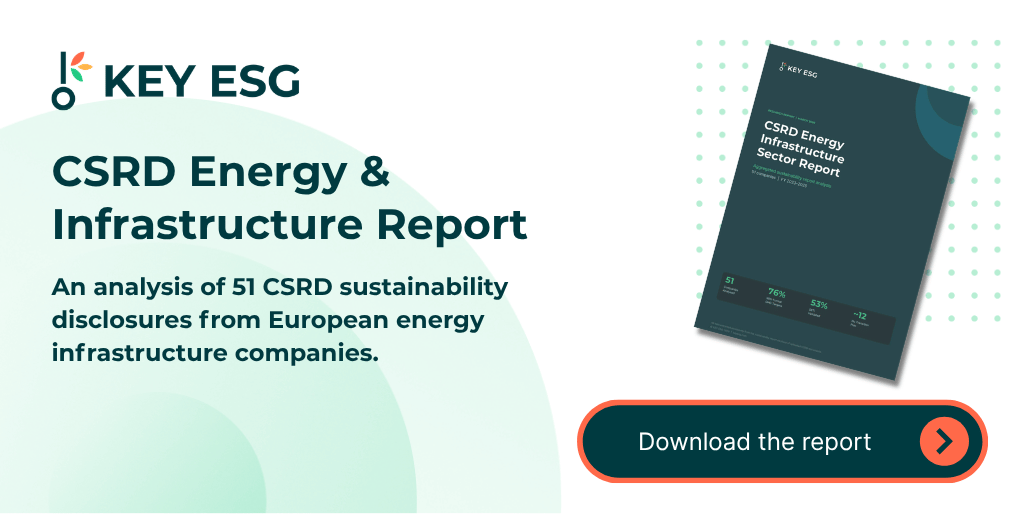
This report is a structured analysis of what 51 companies actually disclosed in their CSRD reports, including the targets they set, the plans they published, and the gaps they acknowledged.
The sector is splitting, not failing
Companies like Ørsted, Enel, TenneT and Iberdrola have produced genuinely operational, Board-governed disclosures. Others have filed reports acknowledging, in their own words, that no transition plan exists, that targets have not been set, and that no date has been determined for doing so. The gap between these two groups is widening with every reporting cycle.
SBTi validation has crossed a critical threshold
With 53% of companies now holding validated SBTi targets, absence of engagement no longer reads as a neutral position. It reads as an outlier that requires investor explanation. This report shows who is validated, who is pending, and who has not engaged, and what that means for disclosure credibility.
Scope 3 is where even the best reporters fall short
At least half the sample carries material gaps in supply chain emissions reporting. Even among the most advanced disclosers, Scope 3 presents the most significant data, methodology and target-setting challenges. TenneT's activity-based methodology across 35+ procurement categories is the current benchmark, and it shows how far most companies still have to travel.
Biodiversity is the next systemic reporting frontier
90% of companies identify E4 Biodiversity as material, the highest-rated non-climate ESRS topic in the sample. But disclosure quality varies enormously: from Fortum's quantified MSA.km² assessments to early-stage policy statements with no targets. The report maps where the sector currently stands and what leading practice looks like.
The first CSRD cycle gives you more structured, comparable data on European energy infrastructure companies than has ever been available. This report tells you what to look for, what to discount, and which companies carry the highest disclosure risk, including companies that explicitly acknowledge they have no transition plan.
If your company is in scope for CSRD, or preparing to be, this report shows where the bar is being set. The best practice section documents the specific approaches that distinguish leading disclosures, from Board-governed transition plans to activity-based Scope 3 methodology.
SF6 phase-out, coal transition exposure, stranded asset risk and structural Scope 3 gaps all affect how you should read reported emissions figures. We explain the most significant ways energy infrastructure disclosures can mislead and how to identify them.
All data in this report was extracted from the sustainability report sections of publicly available CSRD filings. No survey data. No self-reported questionnaires. What companies wrote in their mandatory disclosures, analysed systematically across 43 companies, 13 countries, and three reporting years.
The full library of CSRD disclosures referenced in this report, covering 944 reports across 38 countries and 13 SASB industry sectors, is available at the KEY ESG CSRD Reports Vault.
KEY ESG is a sustainability reporting and data management platform built for private equity investors and their portfolio companies, as well as standalone companies.
Our platform handles the data collection, double materiality workflow, and ESRS-aligned reporting that makes the difference between a credible disclosure and a problematic one.
Click on the image to download the full report - no registration required.

This report is a structured analysis of what 51 companies actually disclosed in their CSRD reports, including the targets they set, the plans they published, and the gaps they acknowledged.
The sector is splitting, not failing
Companies like Ørsted, Enel, TenneT and Iberdrola have produced genuinely operational, Board-governed disclosures. Others have filed reports acknowledging, in their own words, that no transition plan exists, that targets have not been set, and that no date has been determined for doing so. The gap between these two groups is widening with every reporting cycle.
SBTi validation has crossed a critical threshold
With 53% of companies now holding validated SBTi targets, absence of engagement no longer reads as a neutral position. It reads as an outlier that requires investor explanation. This report shows who is validated, who is pending, and who has not engaged, and what that means for disclosure credibility.
Scope 3 is where even the best reporters fall short
At least half the sample carries material gaps in supply chain emissions reporting. Even among the most advanced disclosers, Scope 3 presents the most significant data, methodology and target-setting challenges. TenneT's activity-based methodology across 35+ procurement categories is the current benchmark, and it shows how far most companies still have to travel.
Biodiversity is the next systemic reporting frontier
90% of companies identify E4 Biodiversity as material, the highest-rated non-climate ESRS topic in the sample. But disclosure quality varies enormously: from Fortum's quantified MSA.km² assessments to early-stage policy statements with no targets. The report maps where the sector currently stands and what leading practice looks like.
The first CSRD cycle gives you more structured, comparable data on European energy infrastructure companies than has ever been available. This report tells you what to look for, what to discount, and which companies carry the highest disclosure risk, including companies that explicitly acknowledge they have no transition plan.
If your company is in scope for CSRD, or preparing to be, this report shows where the bar is being set. The best practice section documents the specific approaches that distinguish leading disclosures, from Board-governed transition plans to activity-based Scope 3 methodology.
SF6 phase-out, coal transition exposure, stranded asset risk and structural Scope 3 gaps all affect how you should read reported emissions figures. We explain the most significant ways energy infrastructure disclosures can mislead and how to identify them.
All data in this report was extracted from the sustainability report sections of publicly available CSRD filings. No survey data. No self-reported questionnaires. What companies wrote in their mandatory disclosures, analysed systematically across 43 companies, 13 countries, and three reporting years.
The full library of CSRD disclosures referenced in this report, covering 944 reports across 38 countries and 13 SASB industry sectors, is available at the KEY ESG CSRD Reports Vault.
KEY ESG is a sustainability reporting and data management platform built for private equity investors and their portfolio companies, as well as standalone companies.
Our platform handles the data collection, double materiality workflow, and ESRS-aligned reporting that makes the difference between a credible disclosure and a problematic one.
Click on the image to download the full report - no registration required.
%402x.png)
%402x.png)
