As sustainability reporting becomes increasingly integrated with financial filings and regulatory disclosures, many enterprises are evaluating whether finance-first reporting platforms or sustainability-native systems provide the right long-term infrastructure.
Workiva is a cloud-based connected reporting platform used by more than 6,400 organisations to manage financial reporting, audit processes, risk compliance and ESG disclosures.
This review examines Workiva’s core sustainability capabilities, pricing structure and suitability for enterprises and investment-backed organisations. It also outlines where structural differences emerge when compared with KEY ESG.
Workiva overview
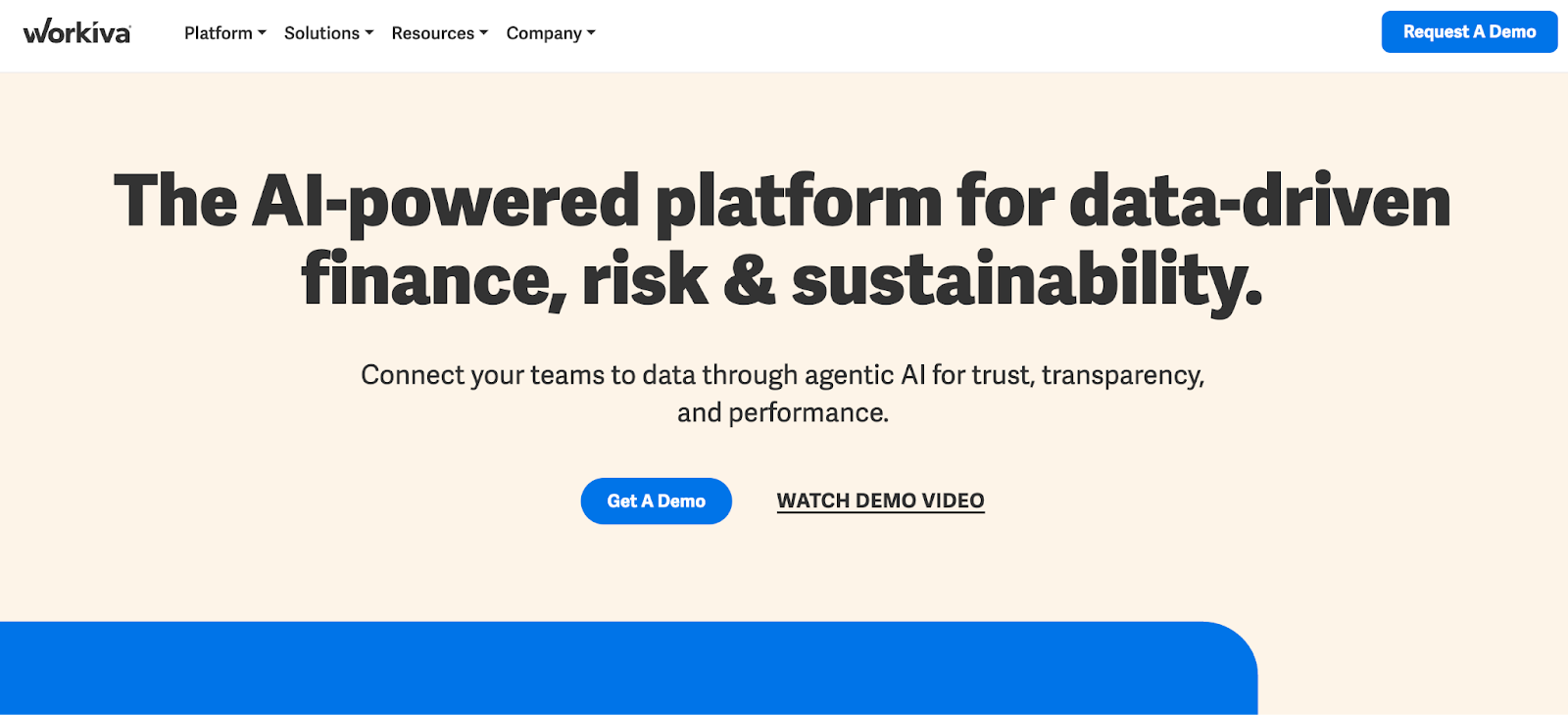
Workiva provides a unified cloud platform designed to streamline complex financial and regulatory reporting. It connects data from ERPs, CRMs and spreadsheets directly into reporting documents, ensuring consistency across filings and disclosures.
Originally built to support SEC filings, SOX compliance and financial reporting, Workiva has expanded its offering to include sustainability reporting within the same connected environment.
The platform is widely adopted across the banking, insurance, energy, and government sectors, where regulatory accuracy, audit traceability, and secure collaboration are critical. Workiva’s positioning centres on connected reporting, automation and real-time collaboration within a secure, audit-ready system.
Workiva’s core features
Workiva structures its platform around connected data, collaborative reporting and audit traceability.
Connected reporting
Workiva links source data directly from enterprise systems into documents, spreadsheets and presentations.
Capabilities include:
- Direct connections to ERP and CRM systems
- Linked data across multiple reports
- Automatic updates when source data changes
- Consistency controls across filings
Practical impact:
By connecting live data to reporting outputs, organisations reduce manual copying and the risk of version control errors. This is particularly valuable in financial reporting environments where precision and consistency are essential.
Real-time collaboration
The platform enables multiple users to edit documents and data simultaneously within a controlled environment.
Features include:
- Multi-user document editing
- Permission-based access controls
- Version history tracking
- Centralised reporting workspaces
Practical impact:
Finance, legal and compliance teams can collaborate, reducing reliance on email chains and disconnected spreadsheets.
Automation and AI
Workiva incorporates AI capabilities to support workflow automation and data aggregation.
Capabilities include:
- Automated data updates
- Workflow acceleration for complex filings
- Agent-based assistance for reporting tasks
- Reduced manual reconciliation
Practical impact:
Automation shortens reporting cycles and decreases the risk of human error in repetitive processes.
Audit trail and traceability
Workiva provides a transparent audit trail that tracks data lineage and user actions.
Features include:
- Full visibility of data changes
- Documentation of who edited what and when
- Traceability from source data to final report
- Compliance-ready documentation
Practical impact:
This level of traceability supports external audits and regulatory inspections, particularly in SEC and SOX reporting environments.
Sustainability reporting capabilities
Workiva extends its connected reporting model to sustainability disclosures.
The platform supports:
- ESG data collection
- Sustainability reporting workflows
- Alignment with regulatory and voluntary standards
- Integration of ESG data into broader corporate reporting
Practical impact:
Organisations seeking to integrate ESG reporting within financial filings can manage disclosures within the same connected reporting system.
Who Workiva works best for
Workiva can be a great solution for:
- Large enterprises managing SEC filings and SOX compliance
- Finance-led reporting teams seeking integrated financial and ESG disclosures
- Highly regulated industries that require strong audit traceability
- Organisations prioritising connected reporting across multiple departments
Its architecture aligns closely with finance and compliance functions.
Workiva pricing
Workiva offers customised enterprise pricing based on organisational size, reporting complexity and selected modules. As they state, “Workiva’s pricing model is a reflection of the value and needs of each organisation. As your goals change, our platform is designed to grow with you.”
According to its pricing page, costs vary depending on:
- Reporting scope
- Number of users
- Required integrations
- Compliance requirements
Prospective customers must request pricing directly from Workiva for a tailored proposal.
Why customers choose KEY ESG
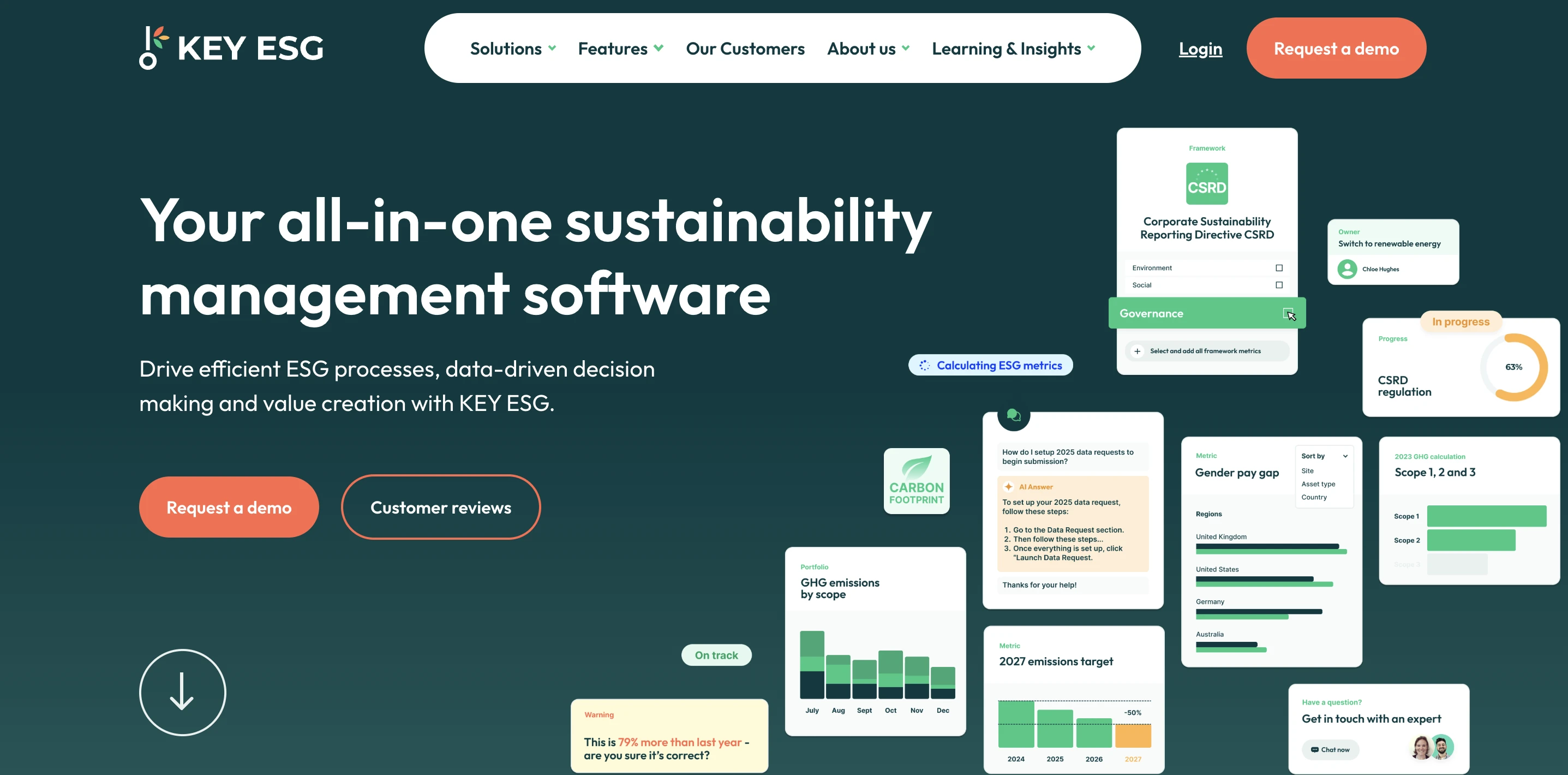
Workiva was originally designed as a financial reporting and compliance platform. Its sustainability functionality extends from this connected reporting foundation.
KEY ESG, by contrast, is designed specifically as a sustainability workflow and carbon accounting system for enterprises and investment firms.
Sustainability-native multi-framework architecture
KEY ESG is built around a single data model that supports CSRD, IFRS S1/S2, SFDR, TCFD, CDP, GRI, Invest Europe, EDCI, and California Climate Laws within a single, structured environment.
While Workiva integrates sustainability into a broader financial reporting framework, KEY ESG centres sustainability governance as a dedicated capability. This distinction becomes relevant for organisations managing evolving sustainability regulations beyond financial filing requirements.
Full Scope 1–3 carbon accounting depth
KEY ESG supports full Scope 1, 2 and 3 carbon accounting across all 15 Scope 3 categories, backed by more than 70,000 emission factors from DEFRA, US EPA, and Climatiq.
Workiva supports ESG disclosures within its reporting environment. KEY ESG provides a deeper carbon accounting architecture specifically designed for enterprise and portfolio-level emissions management.
Portfolio and multi-entity sustainability oversight
For private equity firms and enterprise groups with multiple subsidiaries, KEY ESG combines portfolio-level dashboards with company-level operational workflows.
This architecture supports consistent sustainability governance across complex structures, rather than embedding ESG within financial filing systems.
Workflow-first audit structure for sustainability
KEY ESG is built around structured sustainability workflows, including approvals, evidence management and audit trails tailored to environmental and social disclosures.
While Workiva’s audit capabilities are rooted in financial compliance, KEY ESG’s workflow design reflects sustainability data collection, materiality assessments, and carbon-tracking processes.
If you're interested in Workiva alternatives, we wrote a comparison piece here.
Final verdict
Workiva provides a mature connected reporting platform built for financial compliance, audit traceability and collaborative filings. For organisations seeking to manage ESG disclosures within a finance-led reporting environment, it offers strong integration with existing financial workflows.
For enterprises and investment firms requiring dedicated sustainability governance, comprehensive Scope 1–3 carbon accounting and multi-framework reporting across complex entities, a sustainability-native platform provides a different architectural foundation.
The distinction lies in system intent. Workiva extends financial reporting into ESG. KEY ESG centres sustainability and carbon management as primary functions within the organisation.
Organisations evaluating long-term sustainability infrastructure should consider whether sustainability reporting will remain an extension of finance or evolve into a standalone governance and portfolio oversight capability.
If your organisation requires multi-framework alignment, portfolio visibility, and comprehensive carbon accounting within a single sustainability-focused system, KEY ESG should be considered a primary option.
Request a demo to assess fit for your reporting structure.
As sustainability reporting becomes increasingly integrated with financial filings and regulatory disclosures, many enterprises are evaluating whether finance-first reporting platforms or sustainability-native systems provide the right long-term infrastructure.
Workiva is a cloud-based connected reporting platform used by more than 6,400 organisations to manage financial reporting, audit processes, risk compliance and ESG disclosures.
This review examines Workiva’s core sustainability capabilities, pricing structure and suitability for enterprises and investment-backed organisations. It also outlines where structural differences emerge when compared with KEY ESG.
Workiva overview
Workiva provides a unified cloud platform designed to streamline complex financial and regulatory reporting. It connects data from ERPs, CRMs and spreadsheets directly into reporting documents, ensuring consistency across filings and disclosures.
Originally built to support SEC filings, SOX compliance and financial reporting, Workiva has expanded its offering to include sustainability reporting within the same connected environment.
The platform is widely adopted across the banking, insurance, energy, and government sectors, where regulatory accuracy, audit traceability, and secure collaboration are critical. Workiva’s positioning centres on connected reporting, automation and real-time collaboration within a secure, audit-ready system.
Workiva’s core features
Workiva structures its platform around connected data, collaborative reporting and audit traceability.
Connected reporting
Workiva links source data directly from enterprise systems into documents, spreadsheets and presentations.
Capabilities include:
- Direct connections to ERP and CRM systems
- Linked data across multiple reports
- Automatic updates when source data changes
- Consistency controls across filings
Practical impact:
By connecting live data to reporting outputs, organisations reduce manual copying and the risk of version control errors. This is particularly valuable in financial reporting environments where precision and consistency are essential.
Real-time collaboration
The platform enables multiple users to edit documents and data simultaneously within a controlled environment.
Features include:
- Multi-user document editing
- Permission-based access controls
- Version history tracking
- Centralised reporting workspaces
Practical impact:
Finance, legal and compliance teams can collaborate, reducing reliance on email chains and disconnected spreadsheets.
Automation and AI
Workiva incorporates AI capabilities to support workflow automation and data aggregation.
Capabilities include:
- Automated data updates
- Workflow acceleration for complex filings
- Agent-based assistance for reporting tasks
- Reduced manual reconciliation
Practical impact:
Automation shortens reporting cycles and decreases the risk of human error in repetitive processes.
Audit trail and traceability
Workiva provides a transparent audit trail that tracks data lineage and user actions.
Features include:
- Full visibility of data changes
- Documentation of who edited what and when
- Traceability from source data to final report
- Compliance-ready documentation
Practical impact:
This level of traceability supports external audits and regulatory inspections, particularly in SEC and SOX reporting environments.
Sustainability reporting capabilities
Workiva extends its connected reporting model to sustainability disclosures.
The platform supports:
- ESG data collection
- Sustainability reporting workflows
- Alignment with regulatory and voluntary standards
- Integration of ESG data into broader corporate reporting
Practical impact:
Organisations seeking to integrate ESG reporting within financial filings can manage disclosures within the same connected reporting system.
Who Workiva works best for
Workiva can be a great solution for:
- Large enterprises managing SEC filings and SOX compliance
- Finance-led reporting teams seeking integrated financial and ESG disclosures
- Highly regulated industries that require strong audit traceability
- Organisations prioritising connected reporting across multiple departments
Its architecture aligns closely with finance and compliance functions.
Workiva pricing
Workiva offers customised enterprise pricing based on organisational size, reporting complexity and selected modules. As they state, “Workiva’s pricing model is a reflection of the value and needs of each organisation. As your goals change, our platform is designed to grow with you.”
According to its pricing page, costs vary depending on:
- Reporting scope
- Number of users
- Required integrations
- Compliance requirements
Prospective customers must request pricing directly from Workiva for a tailored proposal.
Why customers choose KEY ESG
Workiva was originally designed as a financial reporting and compliance platform. Its sustainability functionality extends from this connected reporting foundation.
KEY ESG, by contrast, is designed specifically as a sustainability workflow and carbon accounting system for enterprises and investment firms.
Sustainability-native multi-framework architecture
KEY ESG is built around a single data model that supports CSRD, IFRS S1/S2, SFDR, TCFD, CDP, GRI, Invest Europe, EDCI, and California Climate Laws within a single, structured environment.
While Workiva integrates sustainability into a broader financial reporting framework, KEY ESG centres sustainability governance as a dedicated capability. This distinction becomes relevant for organisations managing evolving sustainability regulations beyond financial filing requirements.
Full Scope 1–3 carbon accounting depth
KEY ESG supports full Scope 1, 2 and 3 carbon accounting across all 15 Scope 3 categories, backed by more than 70,000 emission factors from DEFRA, US EPA, and Climatiq.
Workiva supports ESG disclosures within its reporting environment. KEY ESG provides a deeper carbon accounting architecture specifically designed for enterprise and portfolio-level emissions management.
Portfolio and multi-entity sustainability oversight
For private equity firms and enterprise groups with multiple subsidiaries, KEY ESG combines portfolio-level dashboards with company-level operational workflows.
This architecture supports consistent sustainability governance across complex structures, rather than embedding ESG within financial filing systems.
Workflow-first audit structure for sustainability
KEY ESG is built around structured sustainability workflows, including approvals, evidence management and audit trails tailored to environmental and social disclosures.
While Workiva’s audit capabilities are rooted in financial compliance, KEY ESG’s workflow design reflects sustainability data collection, materiality assessments, and carbon-tracking processes.
If you're interested in Workiva alternatives, we wrote a comparison piece here.
Final verdict
Workiva provides a mature connected reporting platform built for financial compliance, audit traceability and collaborative filings. For organisations seeking to manage ESG disclosures within a finance-led reporting environment, it offers strong integration with existing financial workflows.
For enterprises and investment firms requiring dedicated sustainability governance, comprehensive Scope 1–3 carbon accounting and multi-framework reporting across complex entities, a sustainability-native platform provides a different architectural foundation.
The distinction lies in system intent. Workiva extends financial reporting into ESG. KEY ESG centres sustainability and carbon management as primary functions within the organisation.
Organisations evaluating long-term sustainability infrastructure should consider whether sustainability reporting will remain an extension of finance or evolve into a standalone governance and portfolio oversight capability.
If your organisation requires multi-framework alignment, portfolio visibility, and comprehensive carbon accounting within a single sustainability-focused system, KEY ESG should be considered a primary option.
Request a demo to assess fit for your reporting structure.