


As climate disclosure requirements tighten and Scope 3 emissions come under greater regulatory scrutiny, carbon accounting software has become a core business system rather than a specialist sustainability tool.
In 2026, organisations need platforms that go beyond static footprinting to support compliance, audit readiness, and continuous performance improvement.
We’ve put together a list of the 15 best carbon accounting software platforms for 2026. Our list considers regulatory readiness, data quality, scalability, usability, and the ability to turn emissions data into actionable insights.
What is a carbon accounting tool?
A carbon accounting tool is a software platform that enables organisations to measure, manage, and report greenhouse gas emissions across their operations and value chain. It supports structured calculation of Scope 1, 2, and 3 emissions in line with the GHG Protocol, using data from energy use, procurement, logistics, and other operational sources.
Beyond measurement, carbon accounting tools help organisations meet regulatory and disclosure requirements, maintain audit-ready emissions data, and track carbon footprint over time. The most effective platforms connect emissions data to reporting frameworks and reduction planning, enabling businesses to move from compliance-led reporting to ongoing emissions management and improvement.
The 15 Best Carbon Accounting Software for 2026
The platforms below are evaluated based on how well they support real-world carbon accounting requirements in 2026. This includes regulatory alignment, Scope 3 capability, data transparency, audit readiness, and the ability to turn emissions data into decisions, not just reports.
1. KEY ESG
Best overall carbon accounting software for 2026
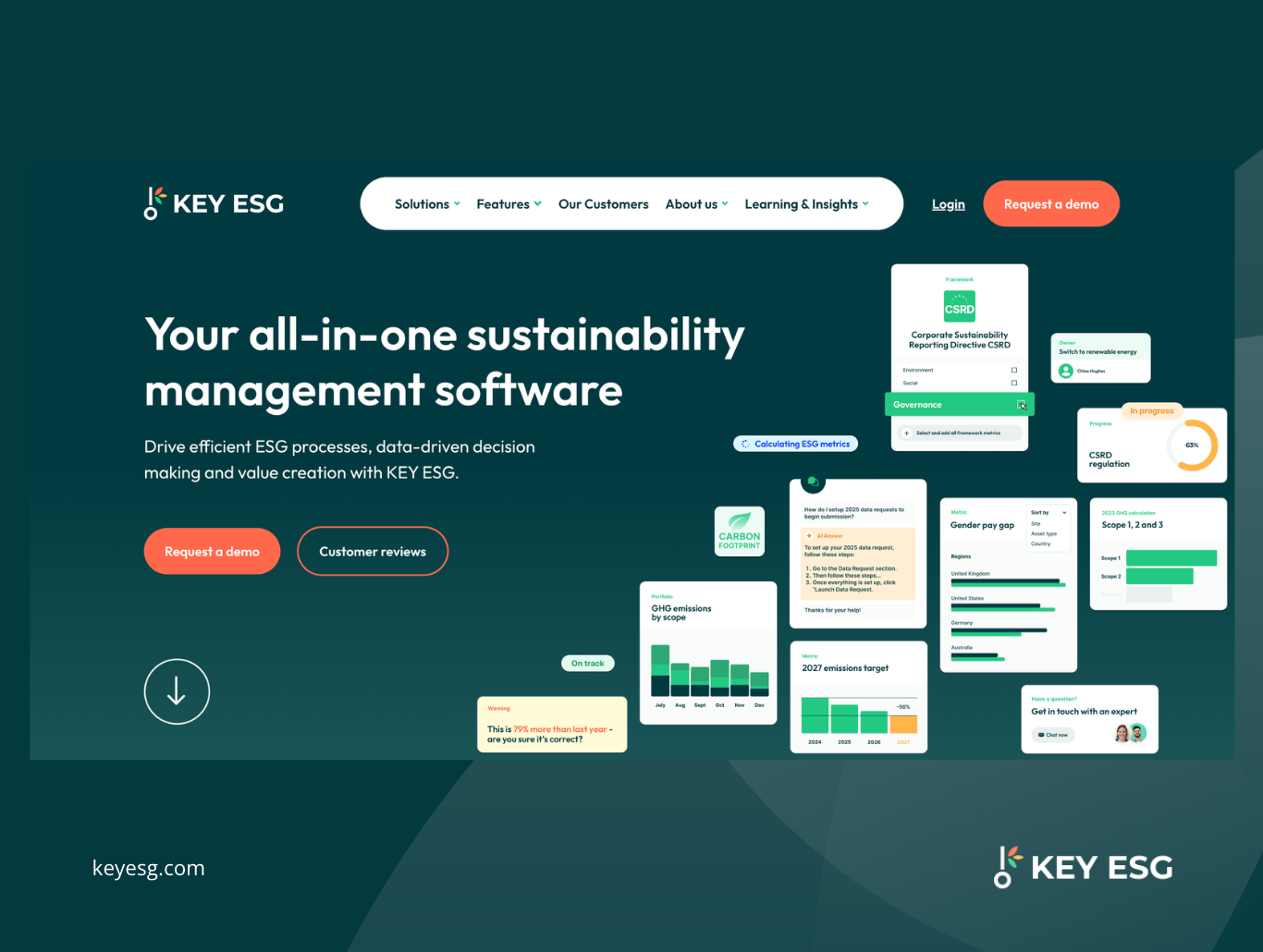
KEY ESG is an all-in-one sustainability management platform. It’s designed to help organisations collect ESG data, support regulatory compliance, report clearly, and improve performance.
Carbon accounting sits at the core of the platform, with full coverage across Scope 1, 2, and 3 emissions.
Our software is built for organisations that need reliable, audit-ready carbon data without compromising on usability. It combines structured data collection with a comprehensive emissions factor library aligned to the GHG Protocol, including more than 70,000 factors from DEFRA, the US EPA, and Climatiq.
Key capabilities
- Full Scope 1, 2, and 3 carbon accounting aligned to the GHG Protocol
- Centralised ESG and emissions data collection across entities and value chains
- Audit-ready calculations with transparent methodologies and traceability
- Designed to support compliance with CSRD, IFRS/ISSB, TCFD, SFDR, the EU Taxonomy and many other global frameworks
- Performance dashboards that link emissions data to reduction planning
Best for Mid-sized and enterprise organisations that need robust carbon accounting alongside broader ESG reporting and performance management.
2. Plan A
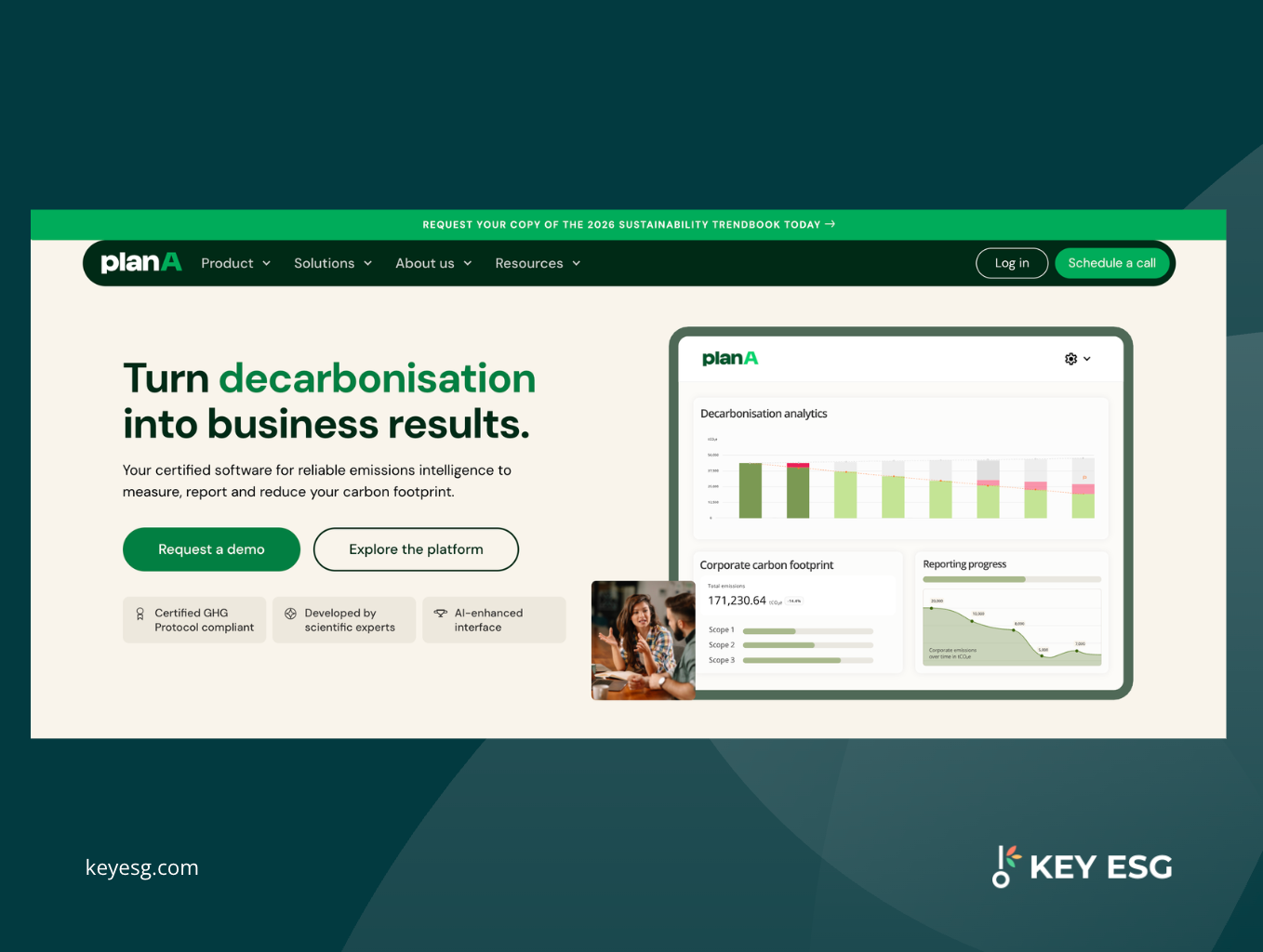
Plan A is a decarbonisation-focused carbon management platform aimed at mid-sized and large organisations. It combines carbon accounting, reporting, and reduction planning, supported by TÜV-certified methodologies and strong advisory services.
The platform uses AI to support data mapping, anomaly detection, and scenario modelling, helping organisations connect emissions data to financial and operational decisions.
Best for: Companies that want a decarbonisation-first approach with hands-on expert support.
3. Persefoni
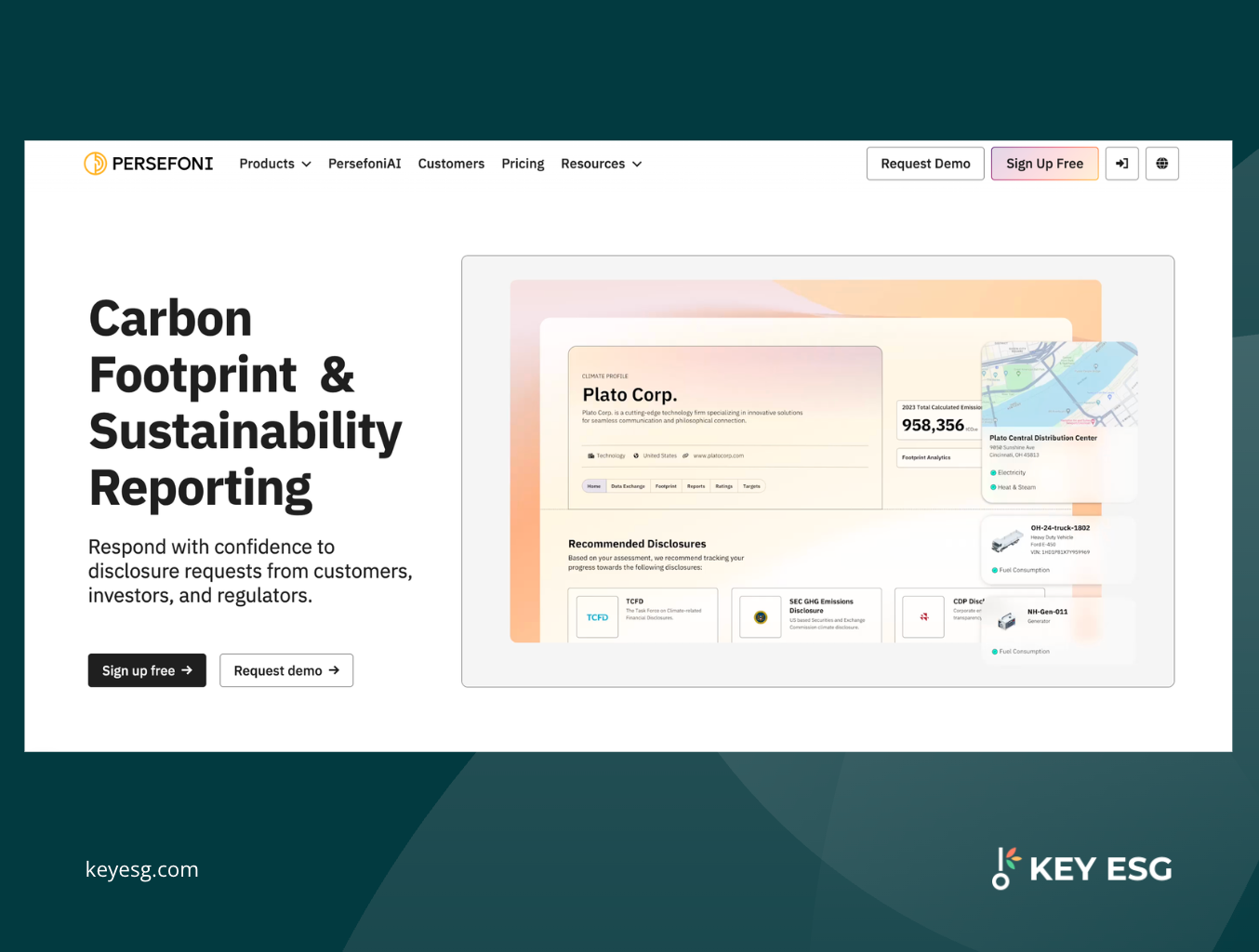
Persefoni is an enterprise-grade carbon accounting and climate disclosure platform, widely used by financial institutions and global corporates. It is designed for investor-grade reporting and alignment with regulatory and financial disclosure frameworks.
The platform emphasises governance, auditability, and transparency through its carbon ledger model.
Best for: Financial institutions and organisations facing high levels of investor and regulatory scrutiny.
4. Watershed
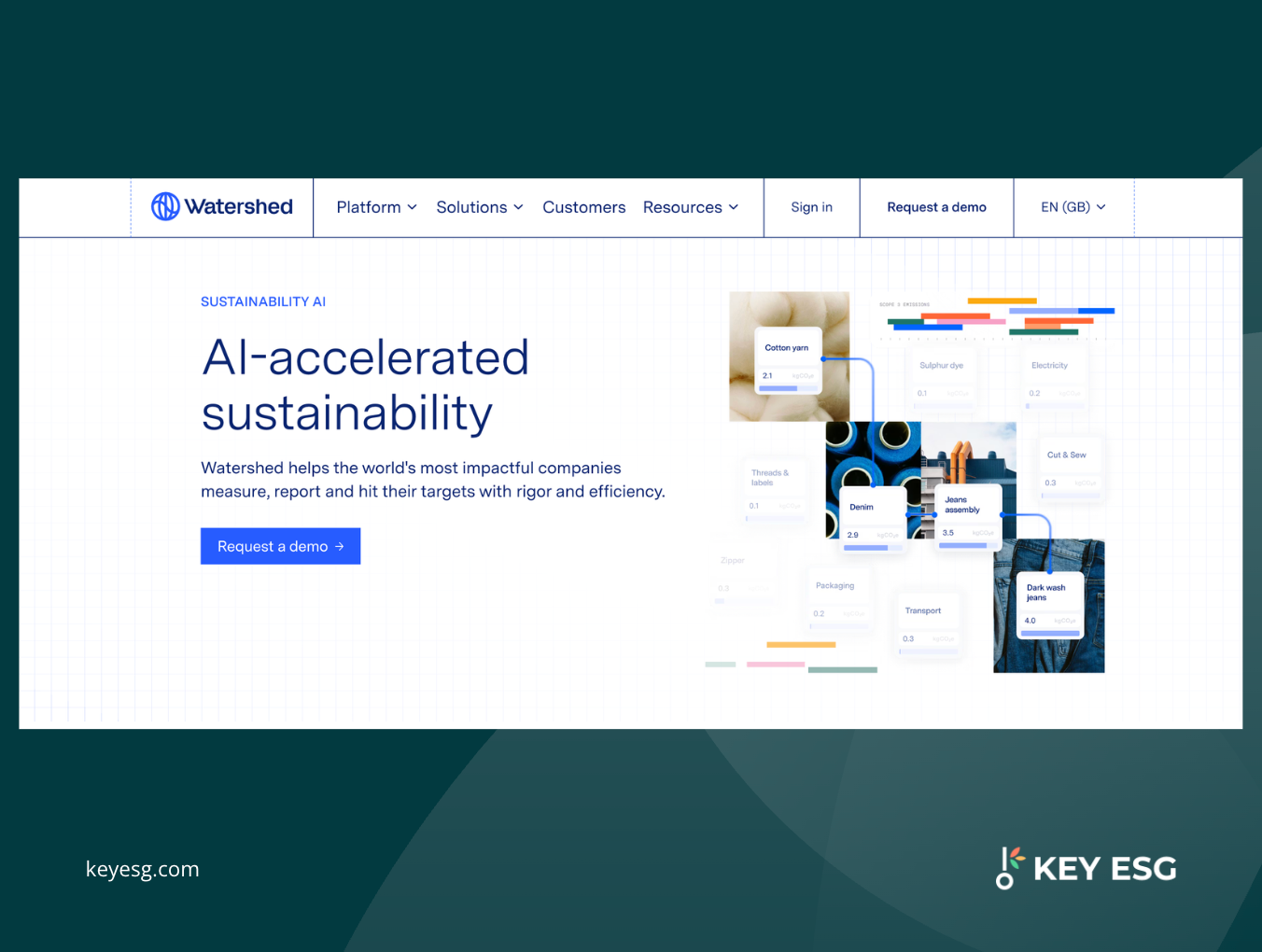
Watershed supports large enterprises with complex operations and ambitious climate targets. Its platform combines real-time emissions tracking, regulatory reporting, and decarbonisation planning, supported by embedded climate expertise.
Watershed is designed for scale and works best in organisations with established internal sustainability teams.
Best for: Large enterprises with mature data infrastructure and board-level climate programmes.
5. Microsoft Sustainability Cloud
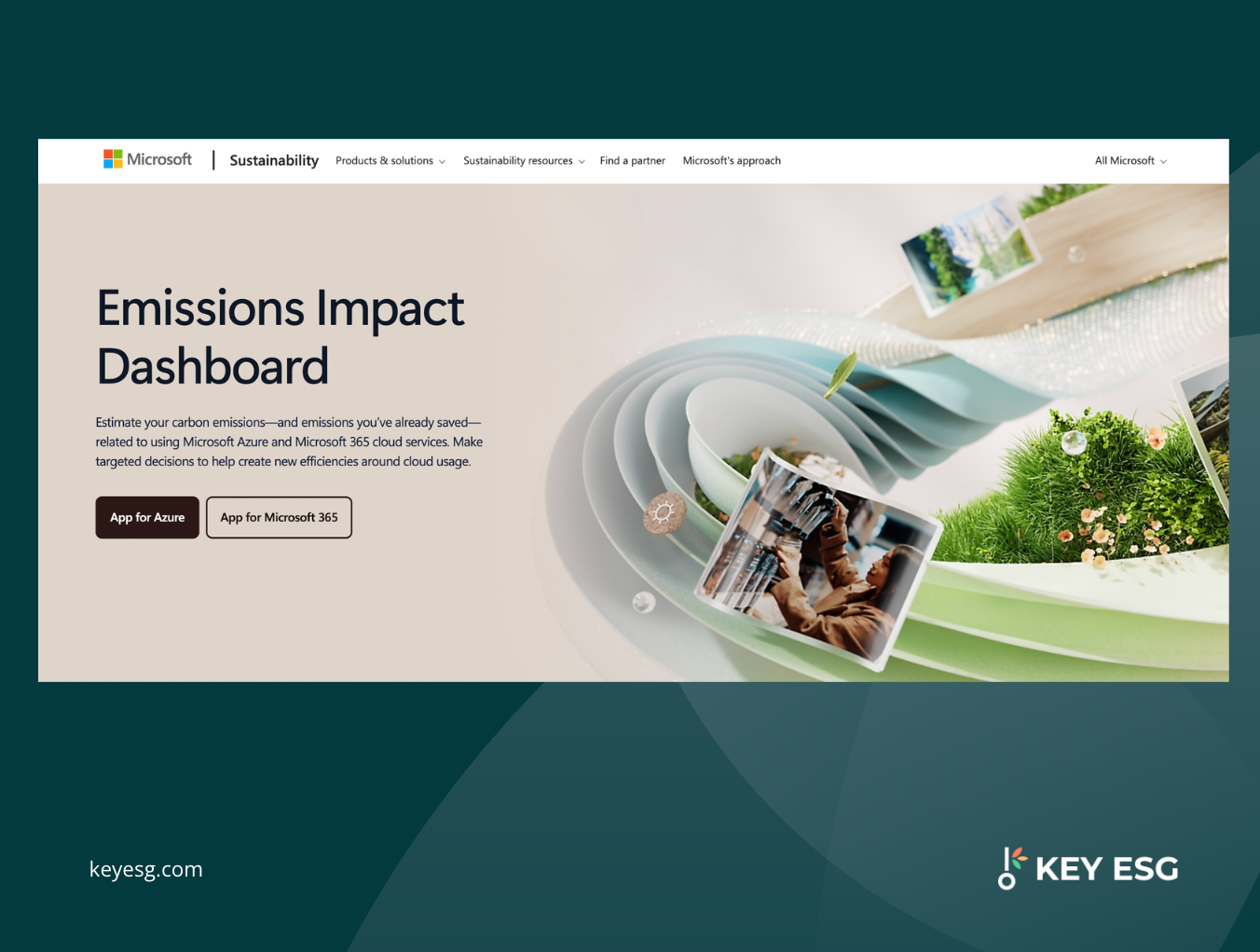
Microsoft Sustainability Cloud integrates carbon and ESG data across the Microsoft ecosystem, including Azure, Dynamics 365, and Power BI. It provides a central data hub for emissions tracking, reporting, and governance.
The platform benefits organisations already embedded in Microsoft’s enterprise stack.
Best for: Large organisations using Microsoft systems that need integrated sustainability reporting.
6. Salesforce Net Zero Cloud
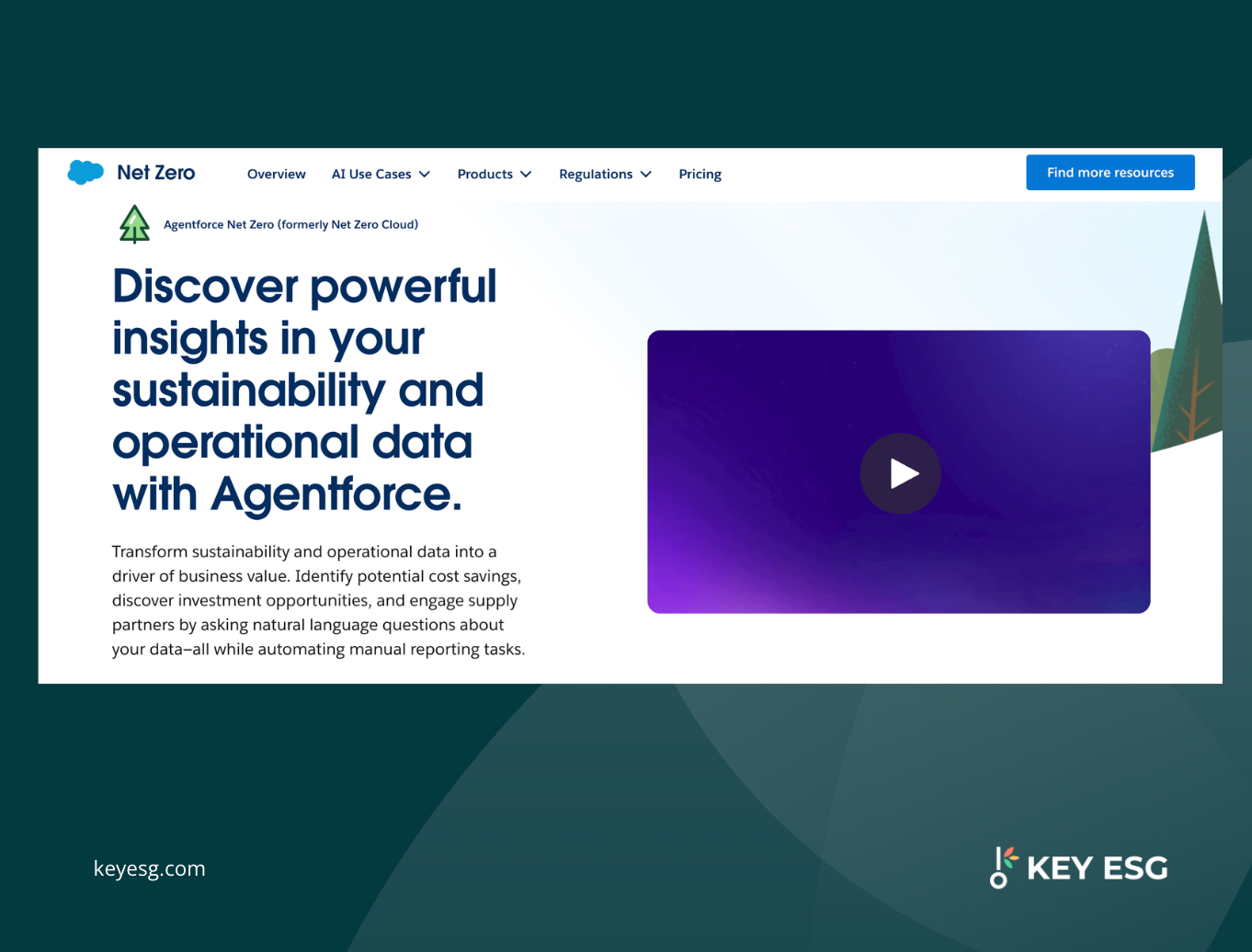
Salesforce Net Zero Cloud is a carbon accounting and sustainability management solution built on the Salesforce platform. It enables organisations to track emissions across all scopes and link sustainability data with core business processes.
The platform is strongest when sustainability is embedded in CRM, finance, and operational workflows.
Best for: Enterprises already using Salesforce that want sustainability data integrated into business systems.
7. Normative
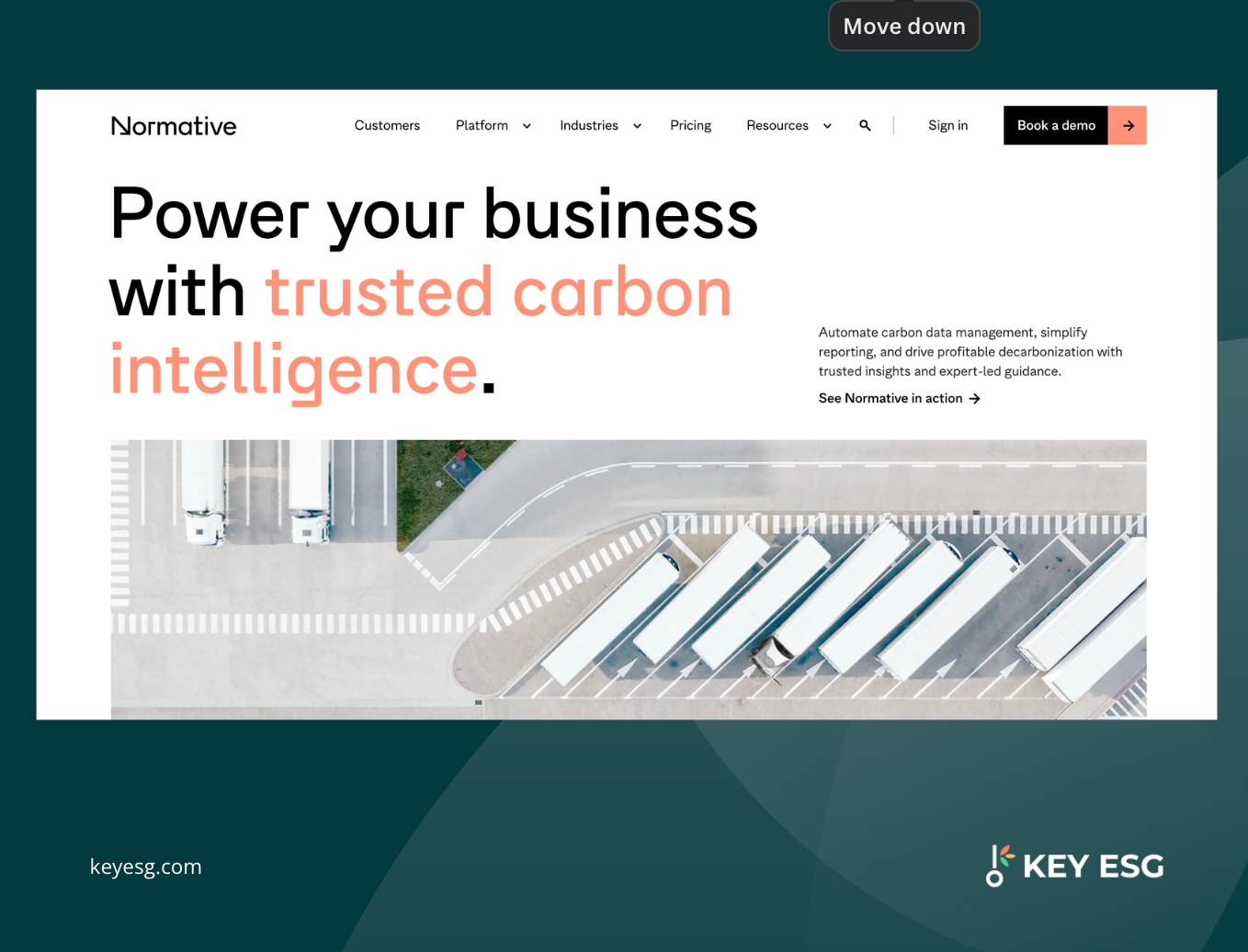
Normative is a science-based carbon accounting platform with a strong focus on Scope 3 emissions and supply chain transparency. It connects directly to procurement systems to support detailed value chain reporting.
Its tooling is designed to support science-based targets and hotspot analysis.
Best for: Organisations with complex global supply chains and significant Scope 3 exposure.
8. Sweep
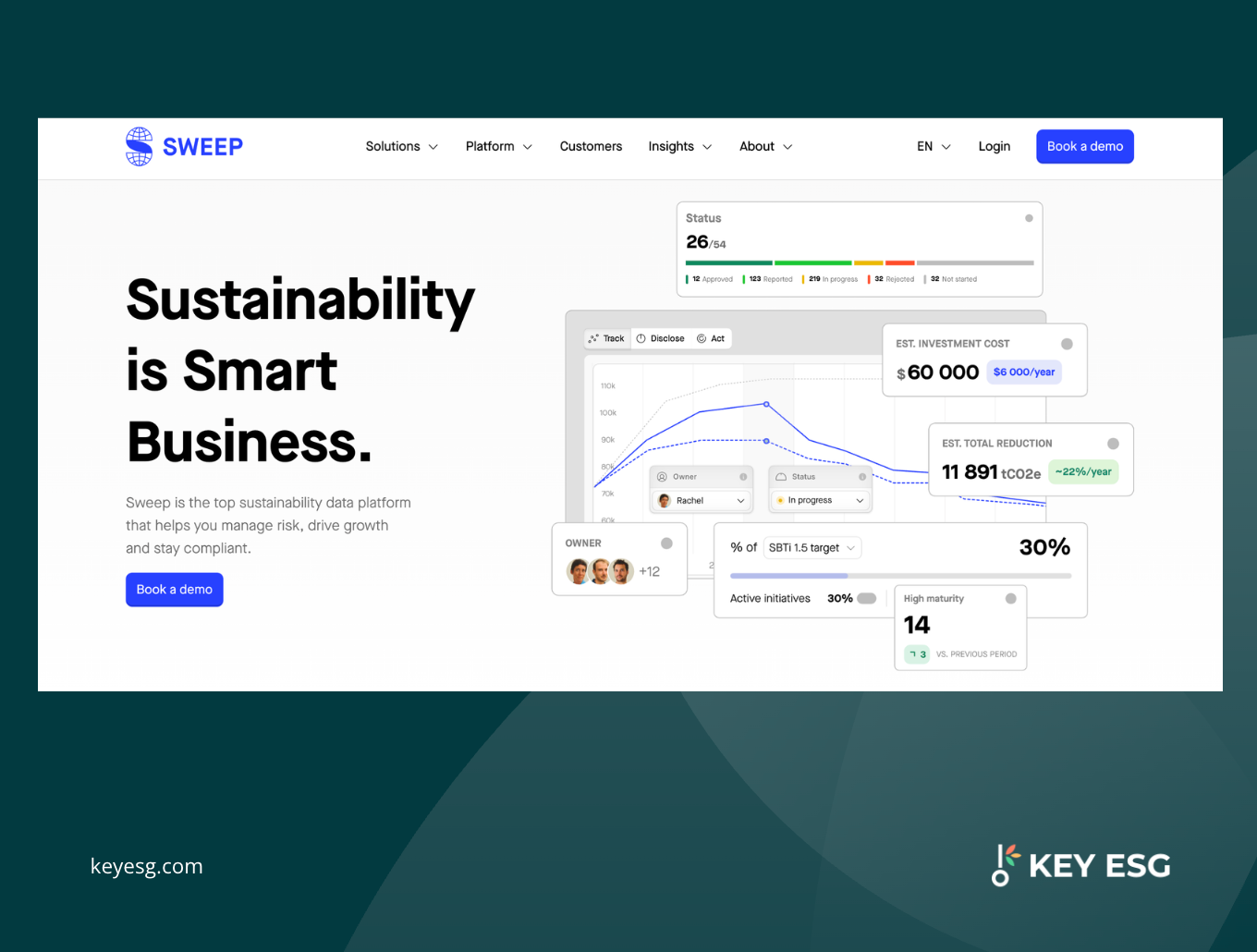
Sweep positions carbon management as a collaborative, cross-functional activity. Its platform assigns emissions ownership across teams and business units, supporting accountability and behavioural change.
It is less focused on audit-grade reporting and more on internal engagement and progress tracking.
Best for: Organisations prioritising internal ownership and operational emissions reduction.
9. Greenly
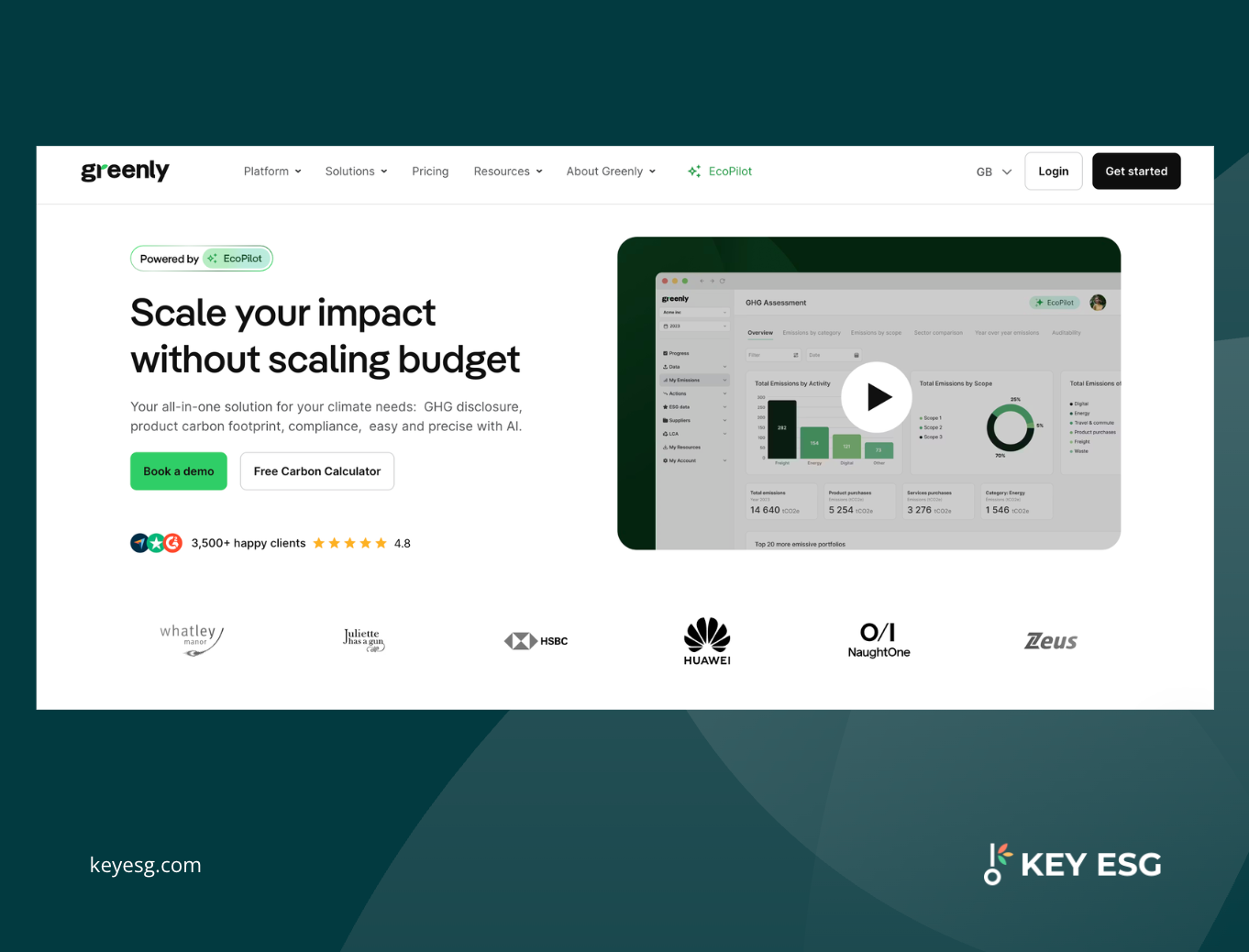
Greenly provides automated carbon accounting with a growing focus on CSRD compliance for European organisations. It is designed to reduce the effort required to complete emissions assessments.
The platform is accessible for teams with limited internal sustainability resources.
Best for: European SMEs and mid-sized organisations preparing for CSRD.
10. IBM Envizi
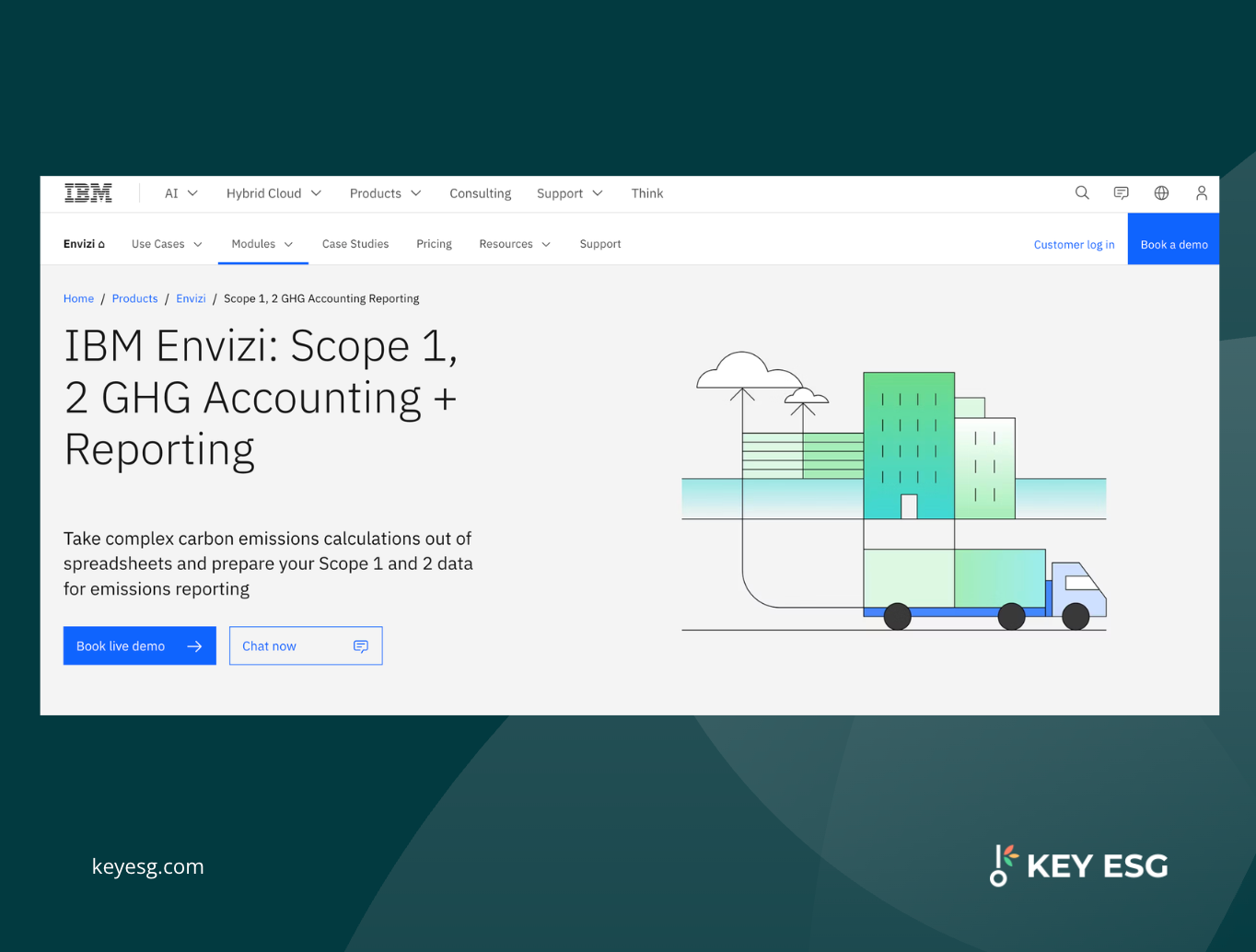
IBM Envizi is an environmental data management platform focused on emissions tracking and sustainability reporting. It supports data consolidation across large, complex organisations.
The platform integrates with broader enterprise systems and supports multiple reporting frameworks.
Best for: Large organisations needing enterprise-scale environmental data management.
11. Sphera
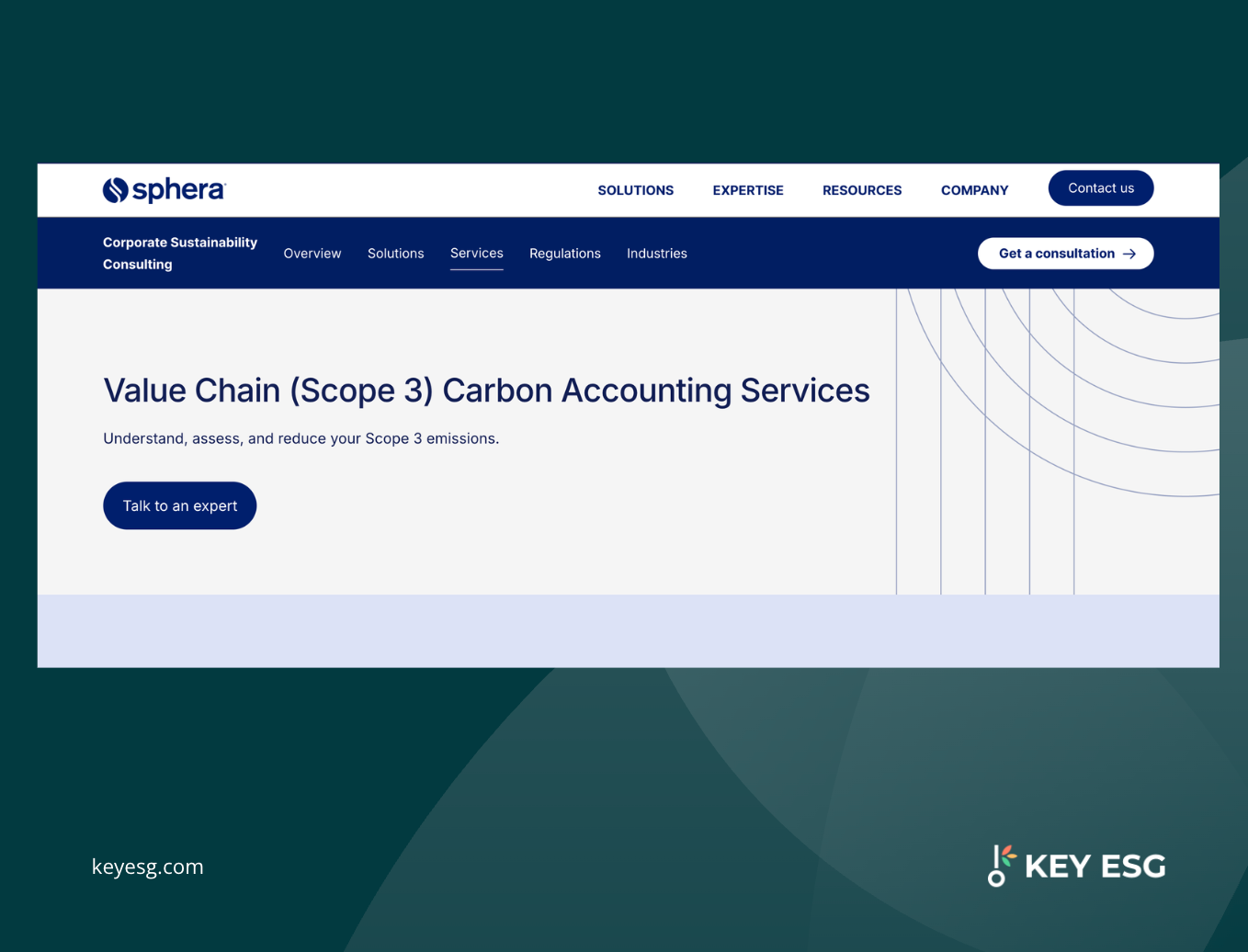
Sphera offers an ESG and risk management platform with carbon accounting, life cycle assessment, and regulatory compliance capabilities. It is widely used in industrial and regulated sectors.
Best for: Manufacturing, energy, and chemicals organisations with complex compliance needs.
12. Workiva
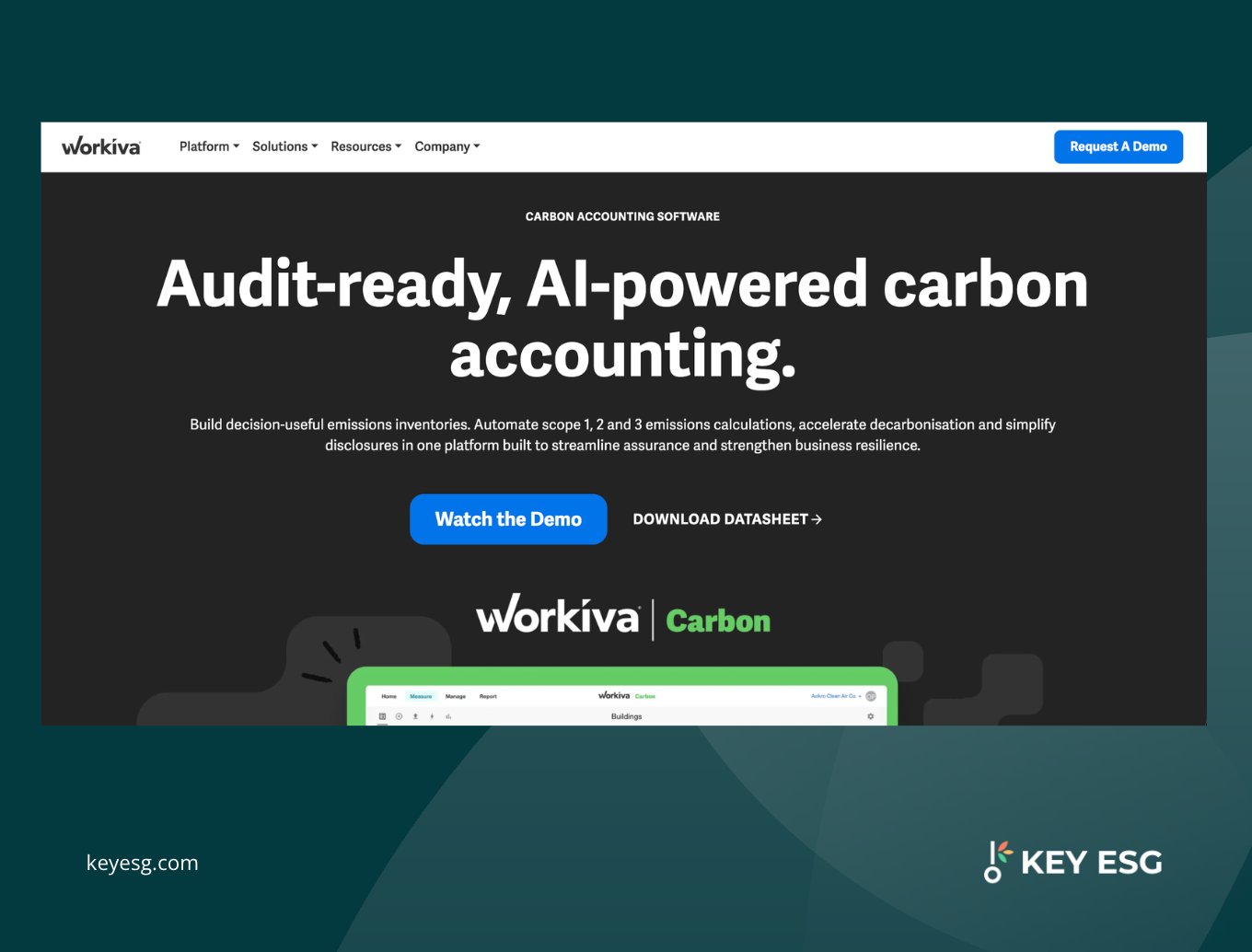
Workiva Carbon extends Workiva’s ESG reporting capabilities into emissions tracking. It focuses on data validation, audit trails, and integration with financial reporting workflows.
Best for: Organisations prioritising assurance, controls, and integrated ESG reporting.
13. Emitwise
.png)
Emitwise is a UK-based carbon accounting platform focused on measuring and benchmarking Scope 1, 2, and 3 emissions. It supports science-based target setting and peer comparisons.
Best for: Mid-sized organisations seeking credible emissions data and benchmarking.
14. SINAI Technologies
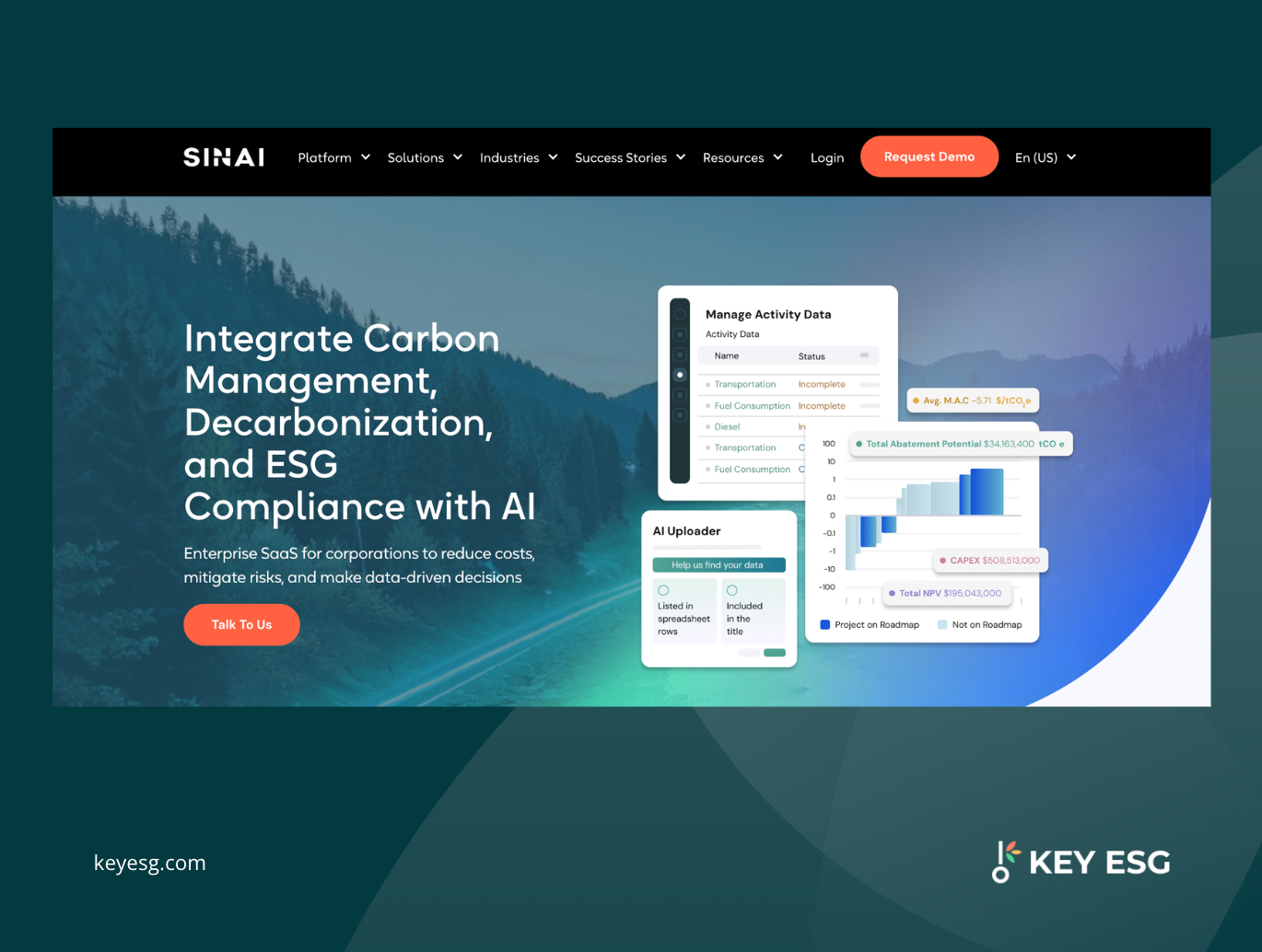
SINAI provides advanced modelling and scenario analysis tools that link carbon accounting with financial planning. Its platform supports internal carbon pricing and transition risk analysis.
Best for: Enterprises integrating decarbonisation into financial forecasting and strategy.
15. Seedling
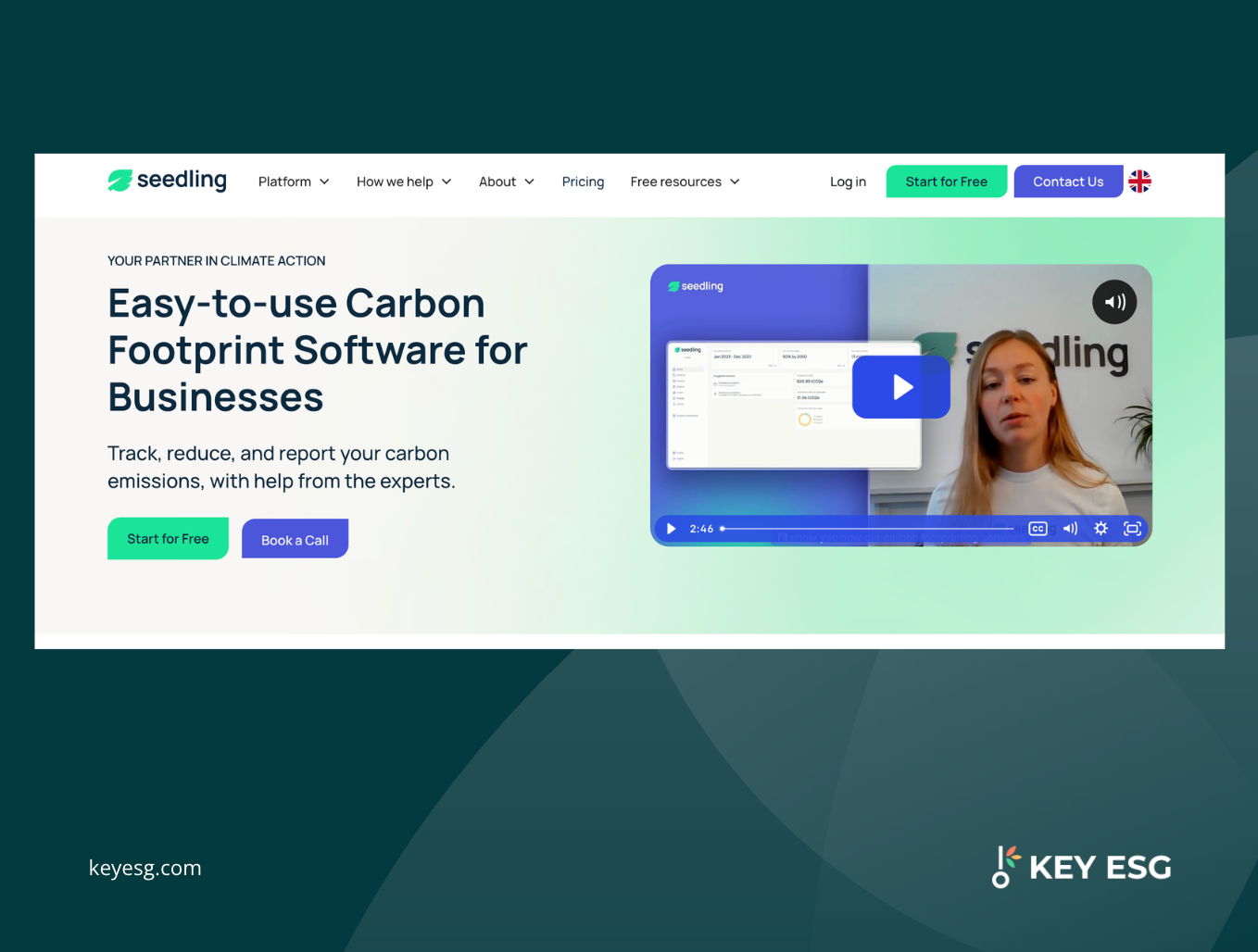
Seedling is designed for small and mid-sized businesses that need accessible carbon accounting supported by dedicated sustainability advisers. It prioritises activity-based data collection and SME-focused reporting requirements.
Best for: SMEs without in-house sustainability expertise that still face customer or regulatory pressure.
How to choose the right carbon accounting solution
The challenge is no longer whether to measure emissions; it’s whether your carbon emissions data will stand up to regulatory scrutiny, internal decision-making, and external assurance.
The right software should reduce carbon reporting risk while enabling ongoing performance improvement.
When evaluating platforms, focus on five essential capabilities.
1. End-to-end Scope 1, 2, and 3 coverage
Carbon accounting software should support full Scope 1, 2, and 3 measurement in line with the Greenhouse Gas Protocol, including complex value chains and evolving Scope 3 requirements. Any software or tools that rely primarily on high-level estimates create risk as disclosure expectations increase.
2. Audit-ready calculations and traceability
Regulators, auditors, and investors increasingly expect emissions data to be explainable and defensible. Platforms should provide clear calculation logic, transparent emissions factors, and traceability from source data through to reported figures.
3. Built-in regulatory alignment
Carbon data must be reusable across multiple frameworks and disclosures. The most effective platforms support alignment with CSRD, IFRS/ISSB, TCFD, STBi and the EU Taxonomy, reducing duplication and the risk of inconsistent reporting.
4. Scalable data collection and system integration
As organisations grow and the reporting scope expands, manual data handling becomes a liability. Carbon accounting software should integrate with finance, procurement, and operational systems, and support structured workflows that scale across entities and suppliers.
5. Performance insight, not just reporting output
Carbon accounting should inform action. Leading platforms connect emissions data to hotspot analysis, reduction planning, and performance tracking, enabling organisations to monitor progress and meet emission reduction targets over time.
KEY ESG makes carbon accounting easy
KEY ESG combines robust carbon accounting with broader ESG data management in a single platform. By linking emissions data to compliance, reporting, and performance improvement, it supports organisations as sustainability expectations continue to rise.
Request a demo to see how KEY ESG can support your carbon accounting and sustainability strategy in 2026 and beyond
As climate disclosure requirements tighten and Scope 3 emissions come under greater regulatory scrutiny, carbon accounting software has become a core business system rather than a specialist sustainability tool.
In 2026, organisations need platforms that go beyond static footprinting to support compliance, audit readiness, and continuous performance improvement.
We’ve put together a list of the 15 best carbon accounting software platforms for 2026. Our list considers regulatory readiness, data quality, scalability, usability, and the ability to turn emissions data into actionable insights.
What is a carbon accounting tool?
A carbon accounting tool is a software platform that enables organisations to measure, manage, and report greenhouse gas emissions across their operations and value chain. It supports structured calculation of Scope 1, 2, and 3 emissions in line with the GHG Protocol, using data from energy use, procurement, logistics, and other operational sources.
Beyond measurement, carbon accounting tools help organisations meet regulatory and disclosure requirements, maintain audit-ready emissions data, and track carbon footprint over time. The most effective platforms connect emissions data to reporting frameworks and reduction planning, enabling businesses to move from compliance-led reporting to ongoing emissions management and improvement.
The 15 Best Carbon Accounting Software for 2026
The platforms below are evaluated based on how well they support real-world carbon accounting requirements in 2026. This includes regulatory alignment, Scope 3 capability, data transparency, audit readiness, and the ability to turn emissions data into decisions, not just reports.
1. KEY ESG
Best overall carbon accounting software for 2026
KEY ESG is an all-in-one sustainability management platform. It’s designed to help organisations collect ESG data, support regulatory compliance, report clearly, and improve performance.
Carbon accounting sits at the core of the platform, with full coverage across Scope 1, 2, and 3 emissions.
Our software is built for organisations that need reliable, audit-ready carbon data without compromising on usability. It combines structured data collection with a comprehensive emissions factor library aligned to the GHG Protocol, including more than 70,000 factors from DEFRA, the US EPA, and Climatiq.
Key capabilities
- Full Scope 1, 2, and 3 carbon accounting aligned to the GHG Protocol
- Centralised ESG and emissions data collection across entities and value chains
- Audit-ready calculations with transparent methodologies and traceability
- Designed to support compliance with CSRD, IFRS/ISSB, TCFD, SFDR, the EU Taxonomy and many other global frameworks
- Performance dashboards that link emissions data to reduction planning
Best for Mid-sized and enterprise organisations that need robust carbon accounting alongside broader ESG reporting and performance management.
2. Plan A
Plan A is a decarbonisation-focused carbon management platform aimed at mid-sized and large organisations. It combines carbon accounting, reporting, and reduction planning, supported by TÜV-certified methodologies and strong advisory services.
The platform uses AI to support data mapping, anomaly detection, and scenario modelling, helping organisations connect emissions data to financial and operational decisions.
Best for: Companies that want a decarbonisation-first approach with hands-on expert support.
3. Persefoni
Persefoni is an enterprise-grade carbon accounting and climate disclosure platform, widely used by financial institutions and global corporates. It is designed for investor-grade reporting and alignment with regulatory and financial disclosure frameworks.
The platform emphasises governance, auditability, and transparency through its carbon ledger model.
Best for: Financial institutions and organisations facing high levels of investor and regulatory scrutiny.
4. Watershed
Watershed supports large enterprises with complex operations and ambitious climate targets. Its platform combines real-time emissions tracking, regulatory reporting, and decarbonisation planning, supported by embedded climate expertise.
Watershed is designed for scale and works best in organisations with established internal sustainability teams.
Best for: Large enterprises with mature data infrastructure and board-level climate programmes.
5. Microsoft Sustainability Cloud
Microsoft Sustainability Cloud integrates carbon and ESG data across the Microsoft ecosystem, including Azure, Dynamics 365, and Power BI. It provides a central data hub for emissions tracking, reporting, and governance.
The platform benefits organisations already embedded in Microsoft’s enterprise stack.
Best for: Large organisations using Microsoft systems that need integrated sustainability reporting.
6. Salesforce Net Zero Cloud
Salesforce Net Zero Cloud is a carbon accounting and sustainability management solution built on the Salesforce platform. It enables organisations to track emissions across all scopes and link sustainability data with core business processes.
The platform is strongest when sustainability is embedded in CRM, finance, and operational workflows.
Best for: Enterprises already using Salesforce that want sustainability data integrated into business systems.
7. Normative
Normative is a science-based carbon accounting platform with a strong focus on Scope 3 emissions and supply chain transparency. It connects directly to procurement systems to support detailed value chain reporting.
Its tooling is designed to support science-based targets and hotspot analysis.
Best for: Organisations with complex global supply chains and significant Scope 3 exposure.
8. Sweep
Sweep positions carbon management as a collaborative, cross-functional activity. Its platform assigns emissions ownership across teams and business units, supporting accountability and behavioural change.
It is less focused on audit-grade reporting and more on internal engagement and progress tracking.
Best for: Organisations prioritising internal ownership and operational emissions reduction.
9. Greenly
Greenly provides automated carbon accounting with a growing focus on CSRD compliance for European organisations. It is designed to reduce the effort required to complete emissions assessments.
The platform is accessible for teams with limited internal sustainability resources.
Best for: European SMEs and mid-sized organisations preparing for CSRD.
10. IBM Envizi
IBM Envizi is an environmental data management platform focused on emissions tracking and sustainability reporting. It supports data consolidation across large, complex organisations.
The platform integrates with broader enterprise systems and supports multiple reporting frameworks.
Best for: Large organisations needing enterprise-scale environmental data management.
11. Sphera
Sphera offers an ESG and risk management platform with carbon accounting, life cycle assessment, and regulatory compliance capabilities. It is widely used in industrial and regulated sectors.
Best for: Manufacturing, energy, and chemicals organisations with complex compliance needs.
12. Workiva
Workiva Carbon extends Workiva’s ESG reporting capabilities into emissions tracking. It focuses on data validation, audit trails, and integration with financial reporting workflows.
Best for: Organisations prioritising assurance, controls, and integrated ESG reporting.
13. Emitwise
Emitwise is a UK-based carbon accounting platform focused on measuring and benchmarking Scope 1, 2, and 3 emissions. It supports science-based target setting and peer comparisons.
Best for: Mid-sized organisations seeking credible emissions data and benchmarking.
14. SINAI Technologies
SINAI provides advanced modelling and scenario analysis tools that link carbon accounting with financial planning. Its platform supports internal carbon pricing and transition risk analysis.
Best for: Enterprises integrating decarbonisation into financial forecasting and strategy.
15. Seedling
Seedling is designed for small and mid-sized businesses that need accessible carbon accounting supported by dedicated sustainability advisers. It prioritises activity-based data collection and SME-focused reporting requirements.
Best for: SMEs without in-house sustainability expertise that still face customer or regulatory pressure.
How to choose the right carbon accounting solution
The challenge is no longer whether to measure emissions; it’s whether your carbon emissions data will stand up to regulatory scrutiny, internal decision-making, and external assurance.
The right software should reduce carbon reporting risk while enabling ongoing performance improvement.
When evaluating platforms, focus on five essential capabilities.
1. End-to-end Scope 1, 2, and 3 coverage
Carbon accounting software should support full Scope 1, 2, and 3 measurement in line with the Greenhouse Gas Protocol, including complex value chains and evolving Scope 3 requirements. Any software or tools that rely primarily on high-level estimates create risk as disclosure expectations increase.
2. Audit-ready calculations and traceability
Regulators, auditors, and investors increasingly expect emissions data to be explainable and defensible. Platforms should provide clear calculation logic, transparent emissions factors, and traceability from source data through to reported figures.
3. Built-in regulatory alignment
Carbon data must be reusable across multiple frameworks and disclosures. The most effective platforms support alignment with CSRD, IFRS/ISSB, TCFD, STBi and the EU Taxonomy, reducing duplication and the risk of inconsistent reporting.
4. Scalable data collection and system integration
As organisations grow and the reporting scope expands, manual data handling becomes a liability. Carbon accounting software should integrate with finance, procurement, and operational systems, and support structured workflows that scale across entities and suppliers.
5. Performance insight, not just reporting output
Carbon accounting should inform action. Leading platforms connect emissions data to hotspot analysis, reduction planning, and performance tracking, enabling organisations to monitor progress and meet emission reduction targets over time.
KEY ESG makes carbon accounting easy
KEY ESG combines robust carbon accounting with broader ESG data management in a single platform. By linking emissions data to compliance, reporting, and performance improvement, it supports organisations as sustainability expectations continue to rise.
Request a demo to see how KEY ESG can support your carbon accounting and sustainability strategy in 2026 and beyond

%402x.png)

