Many organisations collect large volumes of sustainability data, yet struggle to turn that data into KPIs that are comparable, decision-useful, and credible across reporting periods.
The challenge is not just identifying which metrics to track, but defining sustainability performance in a way that links environmental, social, and governance outcomes to long-term value. Without that structure, metrics can become fragmented and difficult to use in reporting or management.
This guide explains how to measure sustainable performance using well-defined KPIs and metrics, align them with reporting needs, and build a more reliable measurement system over time.
What do we mean by sustainable performance?
Sustainable performance refers to how an organisation performs over time across environmental, social, and governance topics that are material to its business.
While it includes disclosure, it also relates to how consistently a company can measure its impact, monitor progress, and use that information to support decisions.
Metrics vs KPIs
In practice, sustainable performance is measured through a mix of underlying metrics and higher-level KPIs.
- Metrics are raw data points that describe activity or outcomes, like total energy use or Scope 3 emissions.
- KPIs are selected indicators used to track performance against priorities, targets, or reporting requirements.
This distinction matters because not every metric is useful as a KPI. The focus should be on identifying which data points – and from which departments or processes – are relevant for decision-making and reporting.
You need to ensure outputs can meet investor, regulatory, and assurance requirements.
Enterprise and investor perspectives
The way sustainable performance is measured can vary depending on the organisation:
- Enterprises track changes in emissions, energy use, workforce indicators, and governance controls across operations.
- Investment firms measure performance across portfolios to support LP reporting, oversight, and value creation at both fund and company level.
A high volume of sustainability data might seem like a reflection of performance. But true performance depends on how clearly KPIs are defined and measured, and how they are used to support reporting and decisions.
Common challenges in measuring sustainable performance
Most organisations don’t struggle to collect sustainability data. The difficulty lies in making that data consistent, comparable, and usable across reporting and decision-making.
Several recurring challenges tend to appear as organisations scale their measurement approach.
- Fragmented data across teams and systems. Sustainability data is typically spread across operations, finance, HR, procurement, and external suppliers. Without a central structure, data collection becomes manual and difficult to standardise.
- Inconsistent definitions and methodologies. The same KPI can be calculated differently across departments or entities. Differences in boundaries, emission factors, or assumptions reduce comparability over time.
- Misalignment across reporting frameworks. Organisations may need to report under CSRD, IFRS S1/S2, TCFD, or other standards. Without alignment, teams duplicate work and produce inconsistent outputs.
- Limited auditability and supporting evidence. Data points are often collected without clear documentation, approval workflows, or traceability. This creates risk when data is reviewed by auditors or external stakeholders.
- Weak links to financial and operational performance. Sustainability metrics are sometimes tracked in isolation, without connection to revenue, cost, or risk. This limits their usefulness for internal decision-making.
These challenges point to a common issue. Sustainable performance measurement breaks down when there is no consistent system behind how KPIs are defined, calculated, and managed.
So, which sustainability KPIs and metrics should you measure?
Most enterprises and investment firms need a core set of indicators that cover environmental, social, and governance performance, alongside metrics that track progress over time.
A useful way to structure KPI selection is to group them by category.
Environmental KPIs
These measure the organisation’s impact on natural resources and climate.
- Scope 1, 2, and 3 emissions
- Energy consumption and energy intensity
- Water usage and water intensity
- Waste generation and recycling rates
These KPIs form the foundation of carbon accounting and environmental reporting, particularly under frameworks such as CSRD and IFRS.
Social KPIs
These focus on workforce and wider stakeholder outcomes.
- Workforce composition and diversity metrics
- Employee turnover and retention
- Health and safety indicators (for example, incident rates)
- Training and development participation
- Supply chain labour standards
Social KPIs are typically sourced from HR systems and supplier data, which introduces challenges around consistency and coverage.
Governance KPIs
These relate to how the organisation is structured, controlled, and managed.
- Board composition and independence
- Existence and enforcement of key policies
- Risk management processes
- Compliance and incident reporting
Governance metrics are critical for demonstrating oversight and internal control, particularly in regulated environments.
Performance and intensity KPIs
These connect sustainability data to business performance.
- Emissions per unit of revenue or production
- Energy intensity per operational output
- Progress against emissions reduction or sustainability targets
- ESG-linked financial indicators
These KPIs help translate raw sustainability data into indicators that can be tracked over time and compared across entities or portfolios.
Not every organisation needs to track every metric. The priority is to select KPIs that are material, consistently defined, and aligned with both reporting requirements and internal decision-making.
How to define, align, and use sustainability KPIs effectively
Selecting KPIs is only the starting point. The real challenge is defining them in a way that keeps data consistent, aligns with reporting requirements, and supports decision-making over time.
A structured approach helps avoid duplication, inconsistent outputs, and gaps during reporting or audit.
Start with frameworks and material topics
Identify which frameworks apply, such as CSRD, IFRS S1/S2, or TCFD, and which sustainability topics are material to your organisation. This ensures KPIs are relevant for both compliance and internal priorities.
Map KPIs to real activities and data sources
Each KPI should link directly to operational or financial data. For example, emissions data should be linked to energy use, procurement, or logistics activities. This reduces reliance on manual inputs and improves data reliability.
Standardise definitions and methodologies
Define how each KPI is calculated, including:
- Boundaries and scope
- Data sources
- Assumptions and emission factors
- Calculation methods
Consistency in methodology is what makes performance comparable across reporting periods and entities.
Align KPIs across frameworks
Many KPIs are required across multiple frameworks. Structuring them so they can be reused across CSRD, IFRS, EU ESG frameworks, and other standards reduces duplication and helps maintain consistency in reported figures.
Use KPIs to support decisions
Sustainability KPIs are more valuable when they are used in decision-making. This may include linking emissions data to capital investment decisions or identifying operational inefficiencies through resource usage.
Defining KPIs in this way creates a more consistent and decision-useful approach to measuring sustainable performance.
How KEY ESG helps measure sustainable performance
Measuring sustainable performance at scale requires more than defined KPIs. It depends on having a system that standardises data, calculations, and reporting across the organisation.
KEY ESG is designed to support this by structuring the collection, management, and reporting of sustainability data across entities, portfolios, and frameworks.
- Centralised sustainability data model. Collect and manage ESG data across business units, sites, and portfolio companies in one system, reducing fragmentation and manual processes.
- KPI tracking aligned with major frameworks. Define and monitor KPIs in line with CSRD, IFRS S1/S2, TCFD, and other frameworks, while maintaining a consistent data structure.
- Comprehensive carbon accounting. Measure Scope 1, 2, and 3 emissions across all categories using 70,000+ emission factors from DEFRA, US EPA, and Climatiq.
- Standardised methodologies and calculations. Apply consistent calculation logic across reporting periods and entities to improve comparability and reduce discrepancies.
- Built-in workflows, approvals, and audit trails. Ensure data is validated, reviewed, and supported by evidence, helping outputs withstand internal and external scrutiny.
- Multi-framework reporting from one system. Use a single dataset to support multiple disclosures, reducing duplication and maintaining alignment across reports.
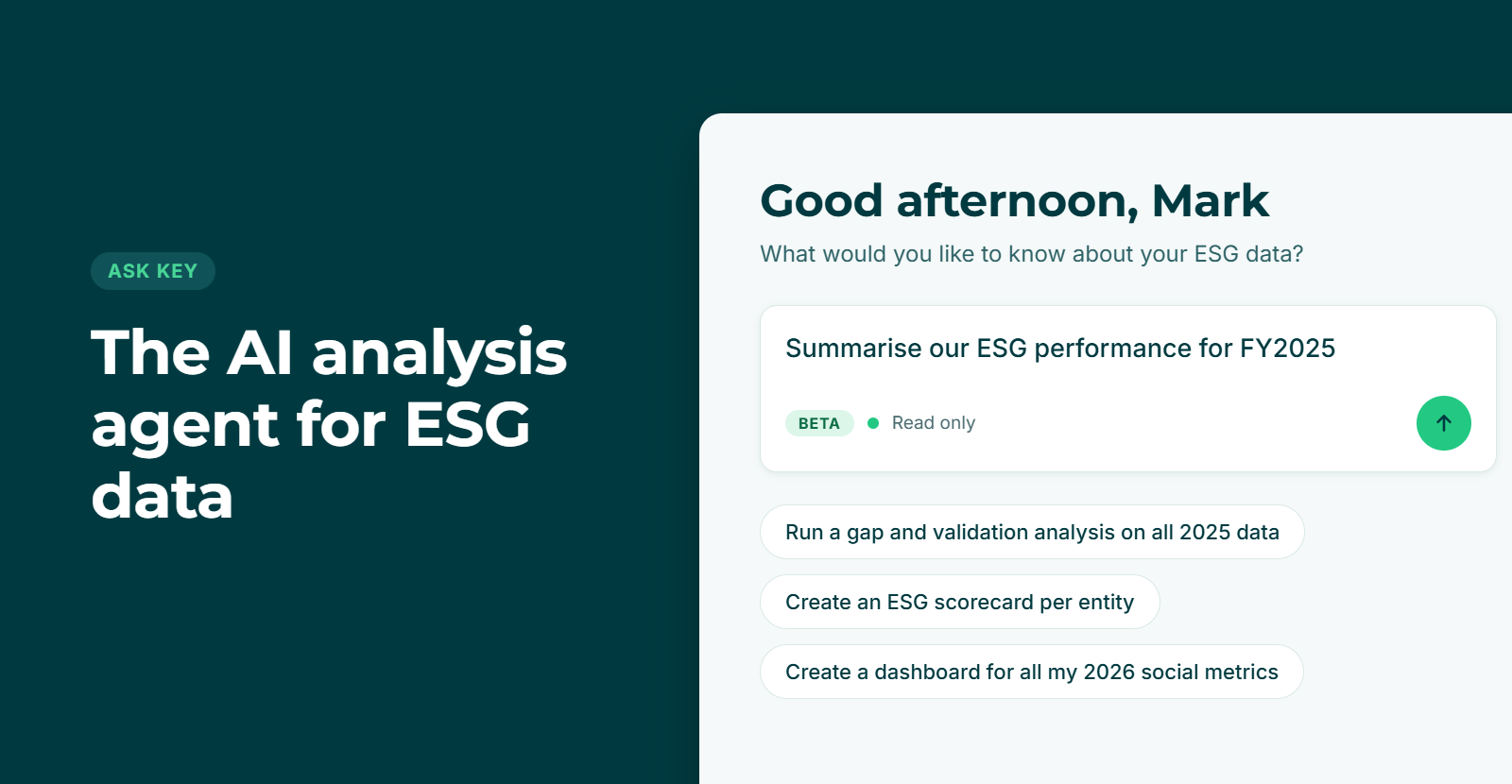
- AI-supported data validation and insights. Apply AI to identify anomalies, improve data accuracy, and surface insights, while maintaining full transparency and user control over calculations and outputs.
By structuring sustainability data and KPIs in this way, organisations can move from fragmented reporting to a more consistent and audit-ready approach to measuring performance.
Getting started with sustainable performance measurement
Sustainable performance measurement improves as definitions, data, and processes become more consistent over time. Starting with a clear set of KPIs and building a structured approach to measuring them creates a more reliable foundation for reporting and decision-making.
As requirements from regulators and investors continue to evolve, organisations that invest early in consistent KPI design and data structure are better positioned to respond without reworking their approach each reporting cycle.
If you’re looking to standardise how sustainability KPIs are defined, tracked, and reported across your organisation or portfolio, request a demo of KEY ESG to see how a structured system can support audit-ready performance measurement.
Many organisations collect large volumes of sustainability data, yet struggle to turn that data into KPIs that are comparable, decision-useful, and credible across reporting periods.
The challenge is not just identifying which metrics to track, but defining sustainability performance in a way that links environmental, social, and governance outcomes to long-term value. Without that structure, metrics can become fragmented and difficult to use in reporting or management.
This guide explains how to measure sustainable performance using well-defined KPIs and metrics, align them with reporting needs, and build a more reliable measurement system over time.
What do we mean by sustainable performance?
Sustainable performance refers to how an organisation performs over time across environmental, social, and governance topics that are material to its business.
While it includes disclosure, it also relates to how consistently a company can measure its impact, monitor progress, and use that information to support decisions.
Metrics vs KPIs
In practice, sustainable performance is measured through a mix of underlying metrics and higher-level KPIs.
- Metrics are raw data points that describe activity or outcomes, like total energy use or Scope 3 emissions.
- KPIs are selected indicators used to track performance against priorities, targets, or reporting requirements.
This distinction matters because not every metric is useful as a KPI. The focus should be on identifying which data points – and from which departments or processes – are relevant for decision-making and reporting.
You need to ensure outputs can meet investor, regulatory, and assurance requirements.
Enterprise and investor perspectives
The way sustainable performance is measured can vary depending on the organisation:
- Enterprises track changes in emissions, energy use, workforce indicators, and governance controls across operations.
- Investment firms measure performance across portfolios to support LP reporting, oversight, and value creation at both fund and company level.
A high volume of sustainability data might seem like a reflection of performance. But true performance depends on how clearly KPIs are defined and measured, and how they are used to support reporting and decisions.
Common challenges in measuring sustainable performance
Most organisations don’t struggle to collect sustainability data. The difficulty lies in making that data consistent, comparable, and usable across reporting and decision-making.
Several recurring challenges tend to appear as organisations scale their measurement approach.
- Fragmented data across teams and systems. Sustainability data is typically spread across operations, finance, HR, procurement, and external suppliers. Without a central structure, data collection becomes manual and difficult to standardise.
- Inconsistent definitions and methodologies. The same KPI can be calculated differently across departments or entities. Differences in boundaries, emission factors, or assumptions reduce comparability over time.
- Misalignment across reporting frameworks. Organisations may need to report under CSRD, IFRS S1/S2, TCFD, or other standards. Without alignment, teams duplicate work and produce inconsistent outputs.
- Limited auditability and supporting evidence. Data points are often collected without clear documentation, approval workflows, or traceability. This creates risk when data is reviewed by auditors or external stakeholders.
- Weak links to financial and operational performance. Sustainability metrics are sometimes tracked in isolation, without connection to revenue, cost, or risk. This limits their usefulness for internal decision-making.
These challenges point to a common issue. Sustainable performance measurement breaks down when there is no consistent system behind how KPIs are defined, calculated, and managed.
So, which sustainability KPIs and metrics should you measure?
Most enterprises and investment firms need a core set of indicators that cover environmental, social, and governance performance, alongside metrics that track progress over time.
A useful way to structure KPI selection is to group them by category.
Environmental KPIs
These measure the organisation’s impact on natural resources and climate.
- Scope 1, 2, and 3 emissions
- Energy consumption and energy intensity
- Water usage and water intensity
- Waste generation and recycling rates
These KPIs form the foundation of carbon accounting and environmental reporting, particularly under frameworks such as CSRD and IFRS.
Social KPIs
These focus on workforce and wider stakeholder outcomes.
- Workforce composition and diversity metrics
- Employee turnover and retention
- Health and safety indicators (for example, incident rates)
- Training and development participation
- Supply chain labour standards
Social KPIs are typically sourced from HR systems and supplier data, which introduces challenges around consistency and coverage.
Governance KPIs
These relate to how the organisation is structured, controlled, and managed.
- Board composition and independence
- Existence and enforcement of key policies
- Risk management processes
- Compliance and incident reporting
Governance metrics are critical for demonstrating oversight and internal control, particularly in regulated environments.
Performance and intensity KPIs
These connect sustainability data to business performance.
- Emissions per unit of revenue or production
- Energy intensity per operational output
- Progress against emissions reduction or sustainability targets
- ESG-linked financial indicators
These KPIs help translate raw sustainability data into indicators that can be tracked over time and compared across entities or portfolios.
Not every organisation needs to track every metric. The priority is to select KPIs that are material, consistently defined, and aligned with both reporting requirements and internal decision-making.
How to define, align, and use sustainability KPIs effectively
Selecting KPIs is only the starting point. The real challenge is defining them in a way that keeps data consistent, aligns with reporting requirements, and supports decision-making over time.
A structured approach helps avoid duplication, inconsistent outputs, and gaps during reporting or audit.
Start with frameworks and material topics
Identify which frameworks apply, such as CSRD, IFRS S1/S2, or TCFD, and which sustainability topics are material to your organisation. This ensures KPIs are relevant for both compliance and internal priorities.
Map KPIs to real activities and data sources
Each KPI should link directly to operational or financial data. For example, emissions data should be linked to energy use, procurement, or logistics activities. This reduces reliance on manual inputs and improves data reliability.
Standardise definitions and methodologies
Define how each KPI is calculated, including:
- Boundaries and scope
- Data sources
- Assumptions and emission factors
- Calculation methods
Consistency in methodology is what makes performance comparable across reporting periods and entities.
Align KPIs across frameworks
Many KPIs are required across multiple frameworks. Structuring them so they can be reused across CSRD, IFRS, EU ESG frameworks, and other standards reduces duplication and helps maintain consistency in reported figures.
Use KPIs to support decisions
Sustainability KPIs are more valuable when they are used in decision-making. This may include linking emissions data to capital investment decisions or identifying operational inefficiencies through resource usage.
Defining KPIs in this way creates a more consistent and decision-useful approach to measuring sustainable performance.
How KEY ESG helps measure sustainable performance
Measuring sustainable performance at scale requires more than defined KPIs. It depends on having a system that standardises data, calculations, and reporting across the organisation.
KEY ESG is designed to support this by structuring the collection, management, and reporting of sustainability data across entities, portfolios, and frameworks.
- Centralised sustainability data model. Collect and manage ESG data across business units, sites, and portfolio companies in one system, reducing fragmentation and manual processes.
- KPI tracking aligned with major frameworks. Define and monitor KPIs in line with CSRD, IFRS S1/S2, TCFD, and other frameworks, while maintaining a consistent data structure.
- Comprehensive carbon accounting. Measure Scope 1, 2, and 3 emissions across all categories using 70,000+ emission factors from DEFRA, US EPA, and Climatiq.
- Standardised methodologies and calculations. Apply consistent calculation logic across reporting periods and entities to improve comparability and reduce discrepancies.
- Built-in workflows, approvals, and audit trails. Ensure data is validated, reviewed, and supported by evidence, helping outputs withstand internal and external scrutiny.
- Multi-framework reporting from one system. Use a single dataset to support multiple disclosures, reducing duplication and maintaining alignment across reports.
- AI-supported data validation and insights. Apply AI to identify anomalies, improve data accuracy, and surface insights, while maintaining full transparency and user control over calculations and outputs.
By structuring sustainability data and KPIs in this way, organisations can move from fragmented reporting to a more consistent and audit-ready approach to measuring performance.
Getting started with sustainable performance measurement
Sustainable performance measurement improves as definitions, data, and processes become more consistent over time. Starting with a clear set of KPIs and building a structured approach to measuring them creates a more reliable foundation for reporting and decision-making.
As requirements from regulators and investors continue to evolve, organisations that invest early in consistent KPI design and data structure are better positioned to respond without reworking their approach each reporting cycle.
If you’re looking to standardise how sustainability KPIs are defined, tracked, and reported across your organisation or portfolio, request a demo of KEY ESG to see how a structured system can support audit-ready performance measurement.